
Giga Raises $61M to Power a Global Marketplace for AI Compute
November 23, 2025
by
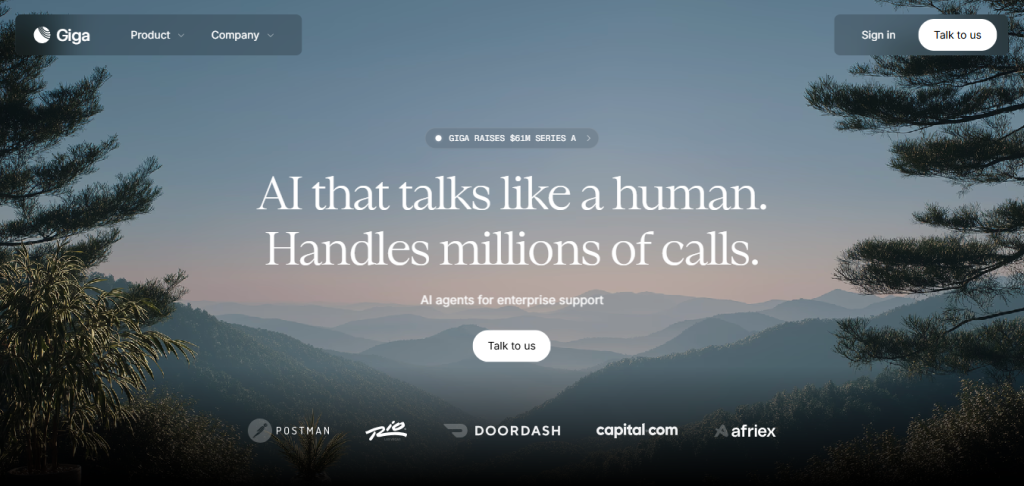
Giga has secured $61,000,000 in Series B funding to solve one of the biggest constraints in AI: access to scalable compute. The round was led by Redpoint Ventures, with participation from Y Combinator and Nexus Venture Partners
, backing the company’s mission to create a global marketplace where GPU supply and AI workload demand meet in real time.
Founded by Varun Vummadi and Esha Dinne, Giga aggregates unused GPU capacity from data centers, decentralized providers, hosting networks, and idle enterprise clusters - turning fragmented supply into a liquid, on-demand resource layer. Instead of fighting for allocations from traditional cloud vendors, AI teams can tap a marketplace that dynamically routes workloads to the best-priced infrastructure at scale.
The Compute Bottleneck Driving AI’s Next Inflection Point
As AI models grow more complex, compute demand is outpacing chip production. Training budgets are ballooning not because models are inefficient, but because hardware availability is fundamentally limited. Even with accelerating GPU output, global demand is expected to outpace supply through 2027, creating persistent scarcity.
Key pressure points shaping the market:
- AI compute demand is growing ~34% YoY, while chip supply growth lags at 12–15%.
- 70%+ of total AI spending goes to training and inference infrastructure, not development.
- Over 80% of AI startups cite GPU access as their primary scaling constraint.
And yet, an estimated 30–40% of existing GPU capacity sits underutilized due to uneven workloads and inefficient distribution - meaning the real problem isn’t scarcity, it’s allocation.
This is the gap Giga is designed to close.
The Strategic Insight: Control the Routing Layer, Not the Hardware
The next generation of AI infrastructure companies won’t win by buying more hardware than their competitors. They will win by controlling the routing, pricing, and orchestration layer that determines where workloads run and why. When supply becomes interchangeable and workloads move dynamically across providers, the market shifts from hardware ownership to coordination power.
That shift changes the economics of AI. Instead of paying fixed-rate cloud markups, teams can route jobs to the most cost-efficient hardware based on performance profiles, geography, uptime, and price. Instead of scaling clusters linearly, companies can spin workloads across distributed supply pools without changing their pipelines. And instead of being constrained by a single cloud vendor, they gain leverage across many.
This is the type of infrastructure that becomes embedded. Once a marketplace becomes the default gateway for compute access, suppliers depend on it for revenue, and customers depend on it for reliability. The platform becomes the standard - not by owning chips, but by owning allocation.
The Market Forces Making Giga Relevant Now
Spending on AI infrastructure is projected to surpass $200 billion annually by 2030, and most of that money will not be spent on model design - it will be spent on compute. Inference alone may account for the majority of costs as real-time applications scale. Meanwhile, decentralized compute is forecasted to take a growing share of total capacity, potentially reaching 15–20% of the market within the decade.
This shift isn’t theoretical. Companies are already diversifying workloads across hyperscalers, rented data center clusters, crypto rigs repurposed for inference, and private GPU farms built specifically for frontier model work. The industry is moving toward a world where compute is sourced like liquidity rather than reserved like real estate.
What Giga offers is the layer that makes that distributed landscape usable.
What Comes Next
With this new funding, Giga plans to expand supplier integrations globally, enhance its automated workload routing systems, and support both training and inference workloads across heterogeneous hardware. Enterprise deployment is a major focus, particularly environments where uptime guarantees and performance verification are mandatory. The company is also developing systems that score suppliers based on reliability, speed, and cost - creating a performance-based marketplace rather than a static directory of available GPUs.
If the strategy works, pricing becomes transparent rather than negotiated, capacity becomes dynamic rather than fixed, and compute becomes a tradable resource instead of a gatekeeping constraint.
Giga isn’t just increasing access to GPUs - it's redefining how compute enters the economy.
Related Articles

Latest Rounds
November 30, 2025 by 
EcoG Raises $18.57M to Accelerate the Operating System for the Global EV Charging Economy
EcoG has raised $18,573,280 in new funding, led by GET Fund with participation from Extantia Capital and Bayern Kapital. Founded...
Read More
Latest Rounds
November 30, 2025 by
Tidalwave Raises $22M Series A to Build the Infrastructure Layer Modern Homebuilders Need for AI-Driven Operations
Tidalwave has raised $22,000,000 in their Series A, led by Permanent Capital with participation from D.R. Horton, Inc. and Engineering...
Read More
Latest Rounds
November 30, 2025 by
WellBeam Raises $10M to Unify Care Coordination Across the Entire Patient Journey
WellBeam Inc. has secured $10 million in Series A funding, marking a major step toward fixing one of the most...
Read More
Latest Rounds
November 30, 2025 by
Automat Raises $15.5M to Redefine Industrial Automation With Adaptive AI
Automat has secured $15.5 million in Series A funding, a major milestone for a company working to radically transform how...
Read More
Latest Rounds
November 30, 2025 by
Poly Raises $8M to Reinvent How People Organize, Search, and Think With Their Files
Poly (US) has closed an $8,000,000 Seed round, marking a decisive moment for one of the most ambitious productivity startups...
Read More
Latest Rounds
November 30, 2025 by
Voio Raises $8.6M to Power AI That Understands Patients as Individuals, Not Data Points
Voio has secured $8.6 million in Seed funding, marking a major step forward for a company working to bring true...
Read More
Latest Rounds
November 30, 2025 by
Ember Raises $4.3M to Reinvent AI-Driven Revenue Cycle Management for Healthcare Providers
Ember has secured $4.3 million in Seed funding, marking a major step toward transforming one of healthcare’s most expensive, error-prone,...
Read More
Latest Rounds
November 30, 2025 by
Modern Life Raises $20M to Redefine Life Insurance Infrastructure With AI-Powered Tools for Advisors
Modern Life has secured $20 million in new funding, marking another major milestone in its mission to rebuild the fractured,...
Read More
Latest Rounds
November 30, 2025 by
Ampersand Raises $80M to Power the Next Era of High-Performance Materials
Ampersand has secured a major $80 million Series A round, positioning itself as one of the most significant deep-tech companies...
Read More
Latest Rounds
November 30, 2025 by
OpenHands Raises $18.8M to Bring Autonomous Coding Agents Into the Enterprise
OpenHands has raised $18.8 million in Series A funding, marking one of the strongest signals yet that autonomous software development...
Read More