
Accipiter Biosciences Raises $12.7M to Redefine Drug Discovery With Targeted Protein Degraders
November 23, 2025
by
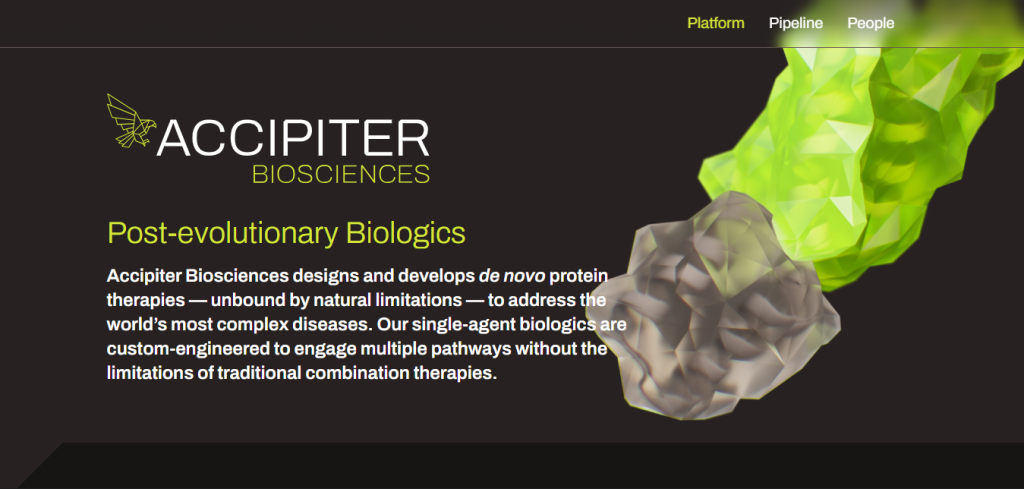
Accipiter Biosciences has raised $12,700,000 in Seed funding to accelerate the development of a new class of targeted protein degraders designed to treat diseases driven by proteins previously considered "undruggable." The round includes participation from Takeda, Flying Fish Partners, Columbus Venture Partners, Cercano Capital, Washington Research Foundation, Pack Ventures, Argonautic Ventures, and Alexandria Investments, led by Matthew Bick.
Instead of using traditional inhibition-based therapeutics, Accipiter focuses on molecules that direct disease-causing proteins toward degradation pathways. This approach is gaining momentum across biotech because it allows treatments to eliminate, not just block, harmful proteins - unlocking targets that have resisted conventional pharmaceuticals.
Why This Matters in Modern Drug Discovery
Out of the estimated 20,000+ proteins in the human body, only about 10–15% are considered druggable using traditional small molecules. That leaves nearly 85% of disease-causing proteins untouched by current drug development methods.
Protein degradation expands this landscape significantly. By targeting proteins for removal rather than modulation, researchers can:
- Treat diseases with no current molecular pathways
- Reduce drug resistance caused by partial inhibition
- Build therapies that act at lower dosages due to catalytic degradation
The global protein degradation therapeutics market is projected to surpass $15 billion by 2030, growing at approximately 30% CAGR, driven by oncology, rare diseases, and neurodegenerative conditions.
Accipiter is positioning itself within this high-growth category by building platform technologies that identify degradation targets and develop molecules that can reach them.
The Core Insight: The Frontier Isn't Discovery - It's Drugability
Many biotech startups focus on discovering new targets or pathways. The bottleneck, however, is execution. Pharmaceutical pipelines are full of validated targets that never reached viability because traditional inhibition couldn’t control or reach the protein in question.
Accipiter’s strategy highlights a critical shift in therapeutics:
The most valuable breakthroughs will come from enabling drug access to targets we've already identified but couldn't previously reach.
This flips drug discovery into a pipeline where:
- Targets are sourced from existing genomic and proteomic research
- Degraders unlock abandoned or high-failure targets
- Treatments progress faster because biology is already validated
Companies that control the tools to convert “undruggable” targets into viable molecules don’t just create drugs - they expand the total addressable market for modern therapeutics.
This is where long-term value compounds. The platform becomes more valuable with each validated protein, turning drug discovery into a scalable engine rather than a case-by-case scientific pursuit.
Market Forces Creating Tailwinds
Several industry shifts make Accipiter’s timing powerful:
- Biotech R&D spending has grown over 40% in the past decade, with a surge in platform-based drug discovery.
- Neurodegenerative disease treatment demand is rising, with Alzheimer’s and Parkinson’s cases projected to increase 70–90% by 2050.
- Precision medicine adoption is accelerating, driven by genomic testing and regulated real-world evidence requirements.
- Big pharma is aggressively partnering with degrader platforms to refill weakened pipelines as legacy patents expire.
Therapeutics that can handle complex protein interactions are becoming mandatory, not experimental.
What Accipiter Is Building
Accipiter’s platform focuses on:
- Custom degraders tuned to specific protein structures
- Drug screening pipelines optimized for protein removal, not inhibition
- Computational models that predict degradation potential across protein families
This creates a system that not only develops molecules, but also identifies which targets are worth pursuing - reducing wasted R&D cycles.
Why Accipiter Could Become a Platform Company, Not a Single-Drug Startup
If Accipiter successfully proves its pipeline across multiple targets, it positions itself as a platform that pharmaceutical companies license, partner with, or acquire. Platform biotech startups command significantly higher strategic value because they generate recurring drug candidates rather than betting on a single therapeutic asset.
As the number of proven degrader targets grows, the value of the platform compounds - similar to how CRISPR companies gained leverage not through a single therapy, but through ownership of an entire modality.
What’s Next for Accipiter
With fresh capital, Accipiter plans to:
- Accelerate preclinical development across priority disease pathways
- Scale computational degradation modeling
- Form early pharmaceutical partnerships
- Advance toward pipeline expansion beyond initial targets
The long-term vision is to translate next-generation degraders into clinically validated therapies that treat diseases previously limited to symptom management or palliative care.
Related Articles

Latest Rounds
November 30, 2025 by 
EcoG Raises $18.57M to Accelerate the Operating System for the Global EV Charging Economy
EcoG has raised $18,573,280 in new funding, led by GET Fund with participation from Extantia Capital and Bayern Kapital. Founded...
Read More
Latest Rounds
November 30, 2025 by
Tidalwave Raises $22M Series A to Build the Infrastructure Layer Modern Homebuilders Need for AI-Driven Operations
Tidalwave has raised $22,000,000 in their Series A, led by Permanent Capital with participation from D.R. Horton, Inc. and Engineering...
Read More
Latest Rounds
November 30, 2025 by
WellBeam Raises $10M to Unify Care Coordination Across the Entire Patient Journey
WellBeam Inc. has secured $10 million in Series A funding, marking a major step toward fixing one of the most...
Read More
Latest Rounds
November 30, 2025 by
Automat Raises $15.5M to Redefine Industrial Automation With Adaptive AI
Automat has secured $15.5 million in Series A funding, a major milestone for a company working to radically transform how...
Read More
Latest Rounds
November 30, 2025 by
Poly Raises $8M to Reinvent How People Organize, Search, and Think With Their Files
Poly (US) has closed an $8,000,000 Seed round, marking a decisive moment for one of the most ambitious productivity startups...
Read More
Latest Rounds
November 30, 2025 by
Voio Raises $8.6M to Power AI That Understands Patients as Individuals, Not Data Points
Voio has secured $8.6 million in Seed funding, marking a major step forward for a company working to bring true...
Read More
Latest Rounds
November 30, 2025 by
Ember Raises $4.3M to Reinvent AI-Driven Revenue Cycle Management for Healthcare Providers
Ember has secured $4.3 million in Seed funding, marking a major step toward transforming one of healthcare’s most expensive, error-prone,...
Read More
Latest Rounds
November 30, 2025 by
Modern Life Raises $20M to Redefine Life Insurance Infrastructure With AI-Powered Tools for Advisors
Modern Life has secured $20 million in new funding, marking another major milestone in its mission to rebuild the fractured,...
Read More
Latest Rounds
November 30, 2025 by
Ampersand Raises $80M to Power the Next Era of High-Performance Materials
Ampersand has secured a major $80 million Series A round, positioning itself as one of the most significant deep-tech companies...
Read More
Latest Rounds
November 30, 2025 by
OpenHands Raises $18.8M to Bring Autonomous Coding Agents Into the Enterprise
OpenHands has raised $18.8 million in Series A funding, marking one of the strongest signals yet that autonomous software development...
Read More