
Flint Raises $15M Series A to Bring Personalized, Data-Driven Learning to K–12 Schools
November 23, 2025
by
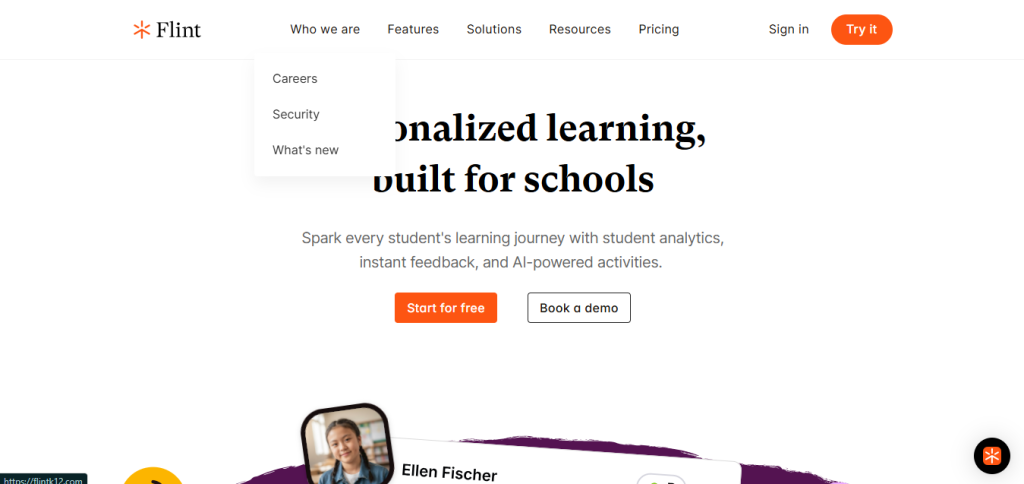
Flint has secured $15,000,000 in Series A funding to scale its personalized learning platform for schools across the United States. The round includes participation from Basis Set, Patron, USC Viterbi, AME Cloud Ventures, Afore Capital, Matt Pittinsky, and Y Combinator, led by Sohan Choudhury.
Flint aims to replace static curriculum delivery with real-time, adaptive learning - using student analytics, AI-powered activities, and instant feedback loops to tailor instruction to each learner. Instead of supplementing classroom content, Flint integrates at the core of instruction, helping schools improve outcomes, reduce teacher workload, and operationalize data-driven education.
The Problem: Personalization Exists in Theory, Not in Classrooms
Schools collect student data across assessments, learning platforms, and classroom tools - but most of that information is fragmented and unused. Teachers rarely have time to translate data into individualized instruction, leading to one-size-fits-all pacing that leaves advanced learners unstimulated and struggling students unsupported.
Flint solves this by:
- Analyzing student performance continuously
- Generating personalized pathways and AI-powered lessons
- Delivering real-time feedback to students and teachers
Instead of reacting to performance at the end of a term, schools can intervene as learning gaps emerge.
Why This Matters Now
The demand for adaptive education is accelerating. The U.S. K-12 edtech market alone is projected to surpass $60 billion by 2030, growing at roughly 16% CAGR, driven by AI-enhanced curriculum tools, data-driven instruction, and district-wide digital adoption.
Additional forces strengthening the need:
- Nearly 70% of U.S. students are not meeting grade-level proficiency benchmarks in core subjects.
- Teachers spend an estimated 7–12 hours per week on manual lesson planning and assessment review.
- District-level learning loss recovery initiatives have increased digital spend by more than 25% since 2021.
- Schools are required to demonstrate quantifiable academic outcomes for federal funding, increasing demand for data tools.
The market isn’t just buying digital tools - it’s buying systems that improve measurable academic results.
How Flint’s Model Creates Leverage
Where most edtech platforms add content, Flint inserts itself into the learning workflow. This changes two fundamental dynamics:
- Progress isn’t measured at the end of learning - it shapes the next step in real time.
- Teachers don't manually differentiate instruction - the system automates the first layer of adaptation.
This provides compounding benefits:
- Less instructional guesswork: students receive tailored tasks as performance shifts.
- Higher retention and mastery: pacing adjusts to skill gaps immediately.
- Teacher time reallocated: effort shifts from paperwork to pedagogy.
Schools that operate this way move from traditional teaching models to continuous optimization - an efficiency pattern similar to how companies evolve from static reporting to real-time analytics.
And that shift is where the real strategic edge emerges: systems that centralize student performance data become deeply embedded in district operations. Once lesson plans, student history, remediation tracks, and assessment cycles all run through one platform, switching becomes costly. Flint isn’t just delivering content; it’s building the academic operating layer schools rely on.
Why It Matters at a Systems Level
The future of education will not be defined by more digital tools - it will be defined by adaptive learning infrastructure that enables schools to scale personalized instruction without increasing teacher effort. Districts that adopt this model early will see compounding academic gains and greater funding justification; those that delay operate at a structural disadvantage.
The shift parallels trends seen in enterprise software:
- Data replaces intuition
- Systems adapt automatically
- Workflows integrate rather than coexist
Education is undergoing that same transition, only slower. Flint accelerates it.
What’s Next for Flint
With new capital, Flint plans to:
- Expand across more U.S. districts and state systems
- Advance AI-powered content and assessment capabilities
- Build deeper integrations with SIS and LMS platforms
- Improve analytics dashboards for teachers and administrators
The long-term vision is to function as the underlying platform schools use to design, deliver, and measure personalized learning at scale - not just a supplementary content tool.
Related Articles

Latest Rounds
November 30, 2025 by 
EcoG Raises $18.57M to Accelerate the Operating System for the Global EV Charging Economy
EcoG has raised $18,573,280 in new funding, led by GET Fund with participation from Extantia Capital and Bayern Kapital. Founded...
Read More
Latest Rounds
November 30, 2025 by
Tidalwave Raises $22M Series A to Build the Infrastructure Layer Modern Homebuilders Need for AI-Driven Operations
Tidalwave has raised $22,000,000 in their Series A, led by Permanent Capital with participation from D.R. Horton, Inc. and Engineering...
Read More
Latest Rounds
November 30, 2025 by
WellBeam Raises $10M to Unify Care Coordination Across the Entire Patient Journey
WellBeam Inc. has secured $10 million in Series A funding, marking a major step toward fixing one of the most...
Read More
Latest Rounds
November 30, 2025 by
Automat Raises $15.5M to Redefine Industrial Automation With Adaptive AI
Automat has secured $15.5 million in Series A funding, a major milestone for a company working to radically transform how...
Read More
Latest Rounds
November 30, 2025 by
Poly Raises $8M to Reinvent How People Organize, Search, and Think With Their Files
Poly (US) has closed an $8,000,000 Seed round, marking a decisive moment for one of the most ambitious productivity startups...
Read More
Latest Rounds
November 30, 2025 by
Voio Raises $8.6M to Power AI That Understands Patients as Individuals, Not Data Points
Voio has secured $8.6 million in Seed funding, marking a major step forward for a company working to bring true...
Read More
Latest Rounds
November 30, 2025 by
Ember Raises $4.3M to Reinvent AI-Driven Revenue Cycle Management for Healthcare Providers
Ember has secured $4.3 million in Seed funding, marking a major step toward transforming one of healthcare’s most expensive, error-prone,...
Read More
Latest Rounds
November 30, 2025 by
Modern Life Raises $20M to Redefine Life Insurance Infrastructure With AI-Powered Tools for Advisors
Modern Life has secured $20 million in new funding, marking another major milestone in its mission to rebuild the fractured,...
Read More
Latest Rounds
November 30, 2025 by
Ampersand Raises $80M to Power the Next Era of High-Performance Materials
Ampersand has secured a major $80 million Series A round, positioning itself as one of the most significant deep-tech companies...
Read More
Latest Rounds
November 30, 2025 by
OpenHands Raises $18.8M to Bring Autonomous Coding Agents Into the Enterprise
OpenHands has raised $18.8 million in Series A funding, marking one of the strongest signals yet that autonomous software development...
Read More