
Span Raises $25M to Transform Engineering Operations with Real-Time Intelligence
November 30, 2025
by
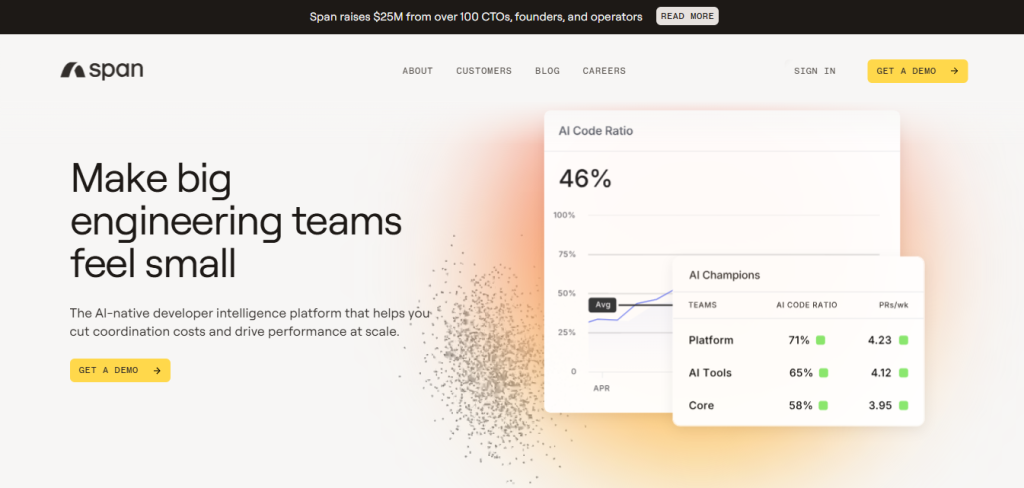
Span has secured $25 million in Seed funding to take on one of the most persistent challenges in modern software development: coordinating large engineering organizations with the speed and clarity of a small team. The round - backed by Alt Capital, Craft Ventures, SV Angel, BoxGroup, Bling Capital, and others - signals strong conviction in Span’s vision to become the operational backbone of engineering at scale.
Founded by J Zac Stein, Span is redefining how teams understand their workload, manage complexity, and make decisions. Instead of adding yet another dashboard or reporting layer, Span rebuilds engineering visibility from the ground up. It unifies work signals across code, tickets, communication, and workflows - turning fragmented activity into a single, coherent picture leaders can actually use.
Engineering Is Now a Coordination Problem, Not a Coding Problem
As software organizations scale, their biggest bottlenecks rarely come from slow developers - they come from slow coordination. Teams operate across dozens of tools. Workflows splinter across services, squads, and shifting priorities. Leaders try to interpret Slack threads, Jira boards, Git activity, and meeting notes just to understand where a project stands.
Industry research backs the pain:
- Engineering orgs now lose 20–40% of weekly output to misalignment and rework.
- Developers spend over 60% of their time on non-coding tasks.
- Global engineering costs are projected to reach $1.3 trillion by 2030, yet delivery speed is plateauing.
Span enters this landscape with a fundamentally different approach: creating a real-time operational map that removes guesswork entirely.
Where the System Becomes the Strategy
As Span’s intelligence layer begins structuring an engineering organization’s workflow, something deeper occurs behind the scenes: the system quietly becomes the rhythm teams align to. Daily standups reference its insights. Planning meetings orbit its signals. Leaders make resource decisions based on patterns the system surfaces - not spreadsheets or anecdotal reports.
Over time, the entire organization begins organizing itself around how Span defines, tracks, and interprets work. And that shift creates a level of dependency that is extremely difficult to unwind. Historical output data, team norms, prioritization logic, and resource allocation patterns all accumulate inside the system. The platform becomes the place where institutional memory lives.
This is the leverage founders often overlook: once a company’s coordination layer is centralized, the vendor powering that layer becomes infrastructure. Switching isn’t just costly - it rewrites how the company works. That is where Span’s long-term defensibility takes shape, not through feature checklists but by owning the operating cadence of engineering itself.
As engineering organizations begin relying on Span’s intelligence layer to understand their own workflow rhythms, a subtle but powerful shift takes place: the system starts shaping the organization’s behavior. Teams reference its insights during standups, planning sessions orbit around its signals, and leaders anchor their decisions on patterns it uncovers rather than assumptions. Over time, this creates a structural dependency - historical context, prioritization logic, and resource flows all accumulate inside Span. And once a company’s operational memory lives in a single system, that system becomes part of how the organization thinks. The real advantage emerges when coordination stops being a manual function and becomes a predictable, data-driven cadence. At that point, Span isn’t just software - it’s the operational foundation teams build around.
Why Investors Are Pouring Capital Into Engineering Intelligence
The investor momentum around Span reflects a broader trend: optimizing engineering has become one of the highest ROI opportunities in enterprise software.
Three shifts are driving this urgency:
- Rising talent costs: senior engineering compensation has climbed by 25–40% in the last four years, making inefficiency extraordinarily expensive.
- Remote and hybrid fragmentation: distributed teams now rely heavily on systems to maintain alignment.
- AI acceleration: with AI increasing output potential, organizations need clarity to direct that output effectively.
Companies no longer scale by hiring - they scale by orchestrating. Span is the orchestration layer.
Why Span’s Timing Couldn’t Be Better
Engineering organizations have reached a breaking point where traditional tools cannot keep pace. Monitoring tools show code changes. Ticketing tools show planned work. Communication tools show discussion. But none of them explain how the organization is actually functioning.
Span sits between all of them and reconstructs the real state of engineering: work velocity, team load, bottlenecks, slowdowns, coordination waste, and dependencies. Leaders get the truth of what’s happening - not the reporting version.
And because Span becomes more accurate as teams generate more data, each additional month of usage increases its value. The system doesn’t just track work - it learns the organization’s patterns. That compounding insight is a structural advantage few competitors can replicate.
What’s Next for Span
With $25M behind it, Span is accelerating its roadmap in four key areas:
- Expanding its intelligence engine to anticipate coordination issues before they occur
- Enhancing cross-team visibility so leaders can manage organizational flow, not individual tasks
- Integrating deeper with enterprise tools to create a seamless operational fabric
- Building advanced analytics that connect engineering performance directly to company outcomes
The company’s stated mission - to make big engineering teams feel small - captures a reality every CTO understands: speed, clarity, and alignment are the currency of competitive advantage. By converting engineering activity into an intelligence system that guides decision-making, Span is positioning itself to become the operating system for technical organizations.
Related Articles

Latest Rounds
November 30, 2025 by 
EcoG Raises $18.57M to Accelerate the Operating System for the Global EV Charging Economy
EcoG has raised $18,573,280 in new funding, led by GET Fund with participation from Extantia Capital and Bayern Kapital. Founded...
Read More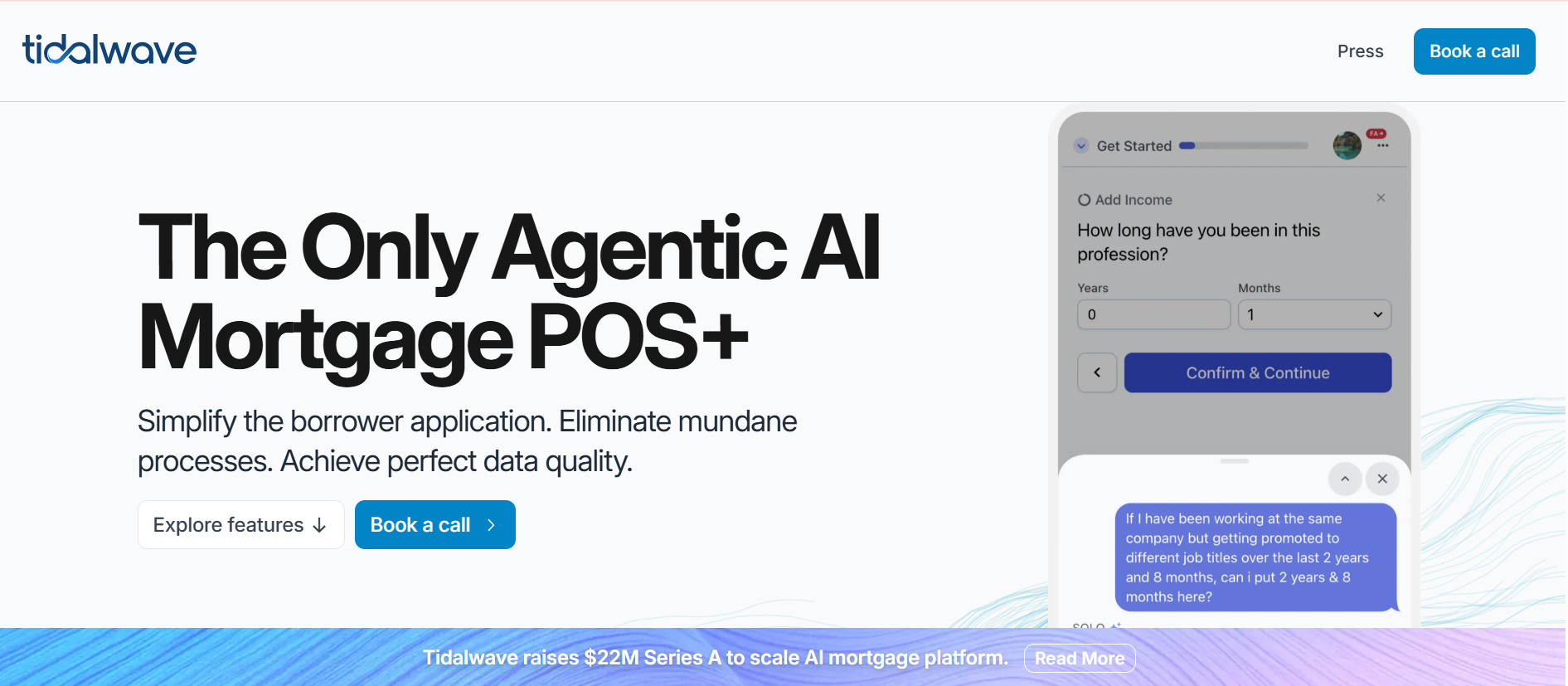
Latest Rounds
November 30, 2025 by
Tidalwave Raises $22M Series A to Build the Infrastructure Layer Modern Homebuilders Need for AI-Driven Operations
Tidalwave has raised $22,000,000 in their Series A, led by Permanent Capital with participation from D.R. Horton, Inc. and Engineering...
Read More
Latest Rounds
November 30, 2025 by
WellBeam Raises $10M to Unify Care Coordination Across the Entire Patient Journey
WellBeam Inc. has secured $10 million in Series A funding, marking a major step toward fixing one of the most...
Read More
Latest Rounds
November 30, 2025 by
Automat Raises $15.5M to Redefine Industrial Automation With Adaptive AI
Automat has secured $15.5 million in Series A funding, a major milestone for a company working to radically transform how...
Read More
Latest Rounds
November 30, 2025 by
Poly Raises $8M to Reinvent How People Organize, Search, and Think With Their Files
Poly (US) has closed an $8,000,000 Seed round, marking a decisive moment for one of the most ambitious productivity startups...
Read More
Latest Rounds
November 30, 2025 by
Voio Raises $8.6M to Power AI That Understands Patients as Individuals, Not Data Points
Voio has secured $8.6 million in Seed funding, marking a major step forward for a company working to bring true...
Read More
Latest Rounds
November 30, 2025 by
Ember Raises $4.3M to Reinvent AI-Driven Revenue Cycle Management for Healthcare Providers
Ember has secured $4.3 million in Seed funding, marking a major step toward transforming one of healthcare’s most expensive, error-prone,...
Read More
Latest Rounds
November 30, 2025 by
Modern Life Raises $20M to Redefine Life Insurance Infrastructure With AI-Powered Tools for Advisors
Modern Life has secured $20 million in new funding, marking another major milestone in its mission to rebuild the fractured,...
Read More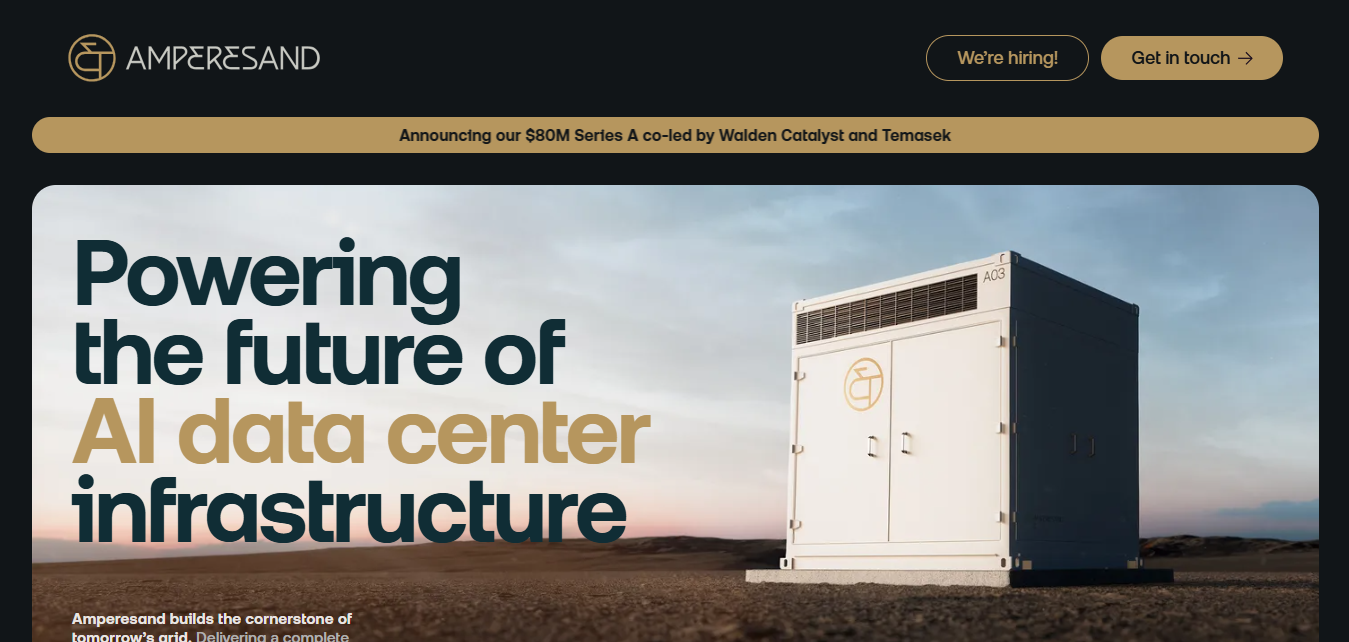
Latest Rounds
November 30, 2025 by
Ampersand Raises $80M to Power the Next Era of High-Performance Materials
Ampersand has secured a major $80 million Series A round, positioning itself as one of the most significant deep-tech companies...
Read More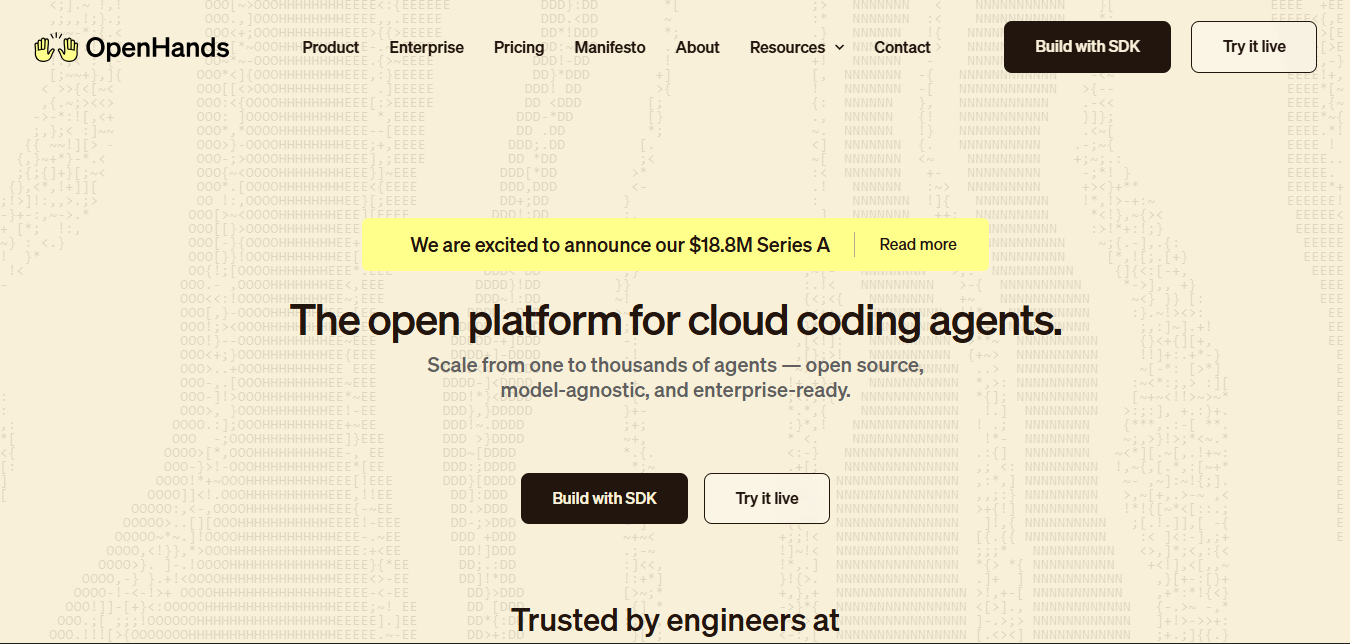
Latest Rounds
November 30, 2025 by
OpenHands Raises $18.8M to Bring Autonomous Coding Agents Into the Enterprise
OpenHands has raised $18.8 million in Series A funding, marking one of the strongest signals yet that autonomous software development...
Read More