
OpenHands Raises $18.8M to Bring Autonomous Coding Agents Into the Enterprise
November 30, 2025
by
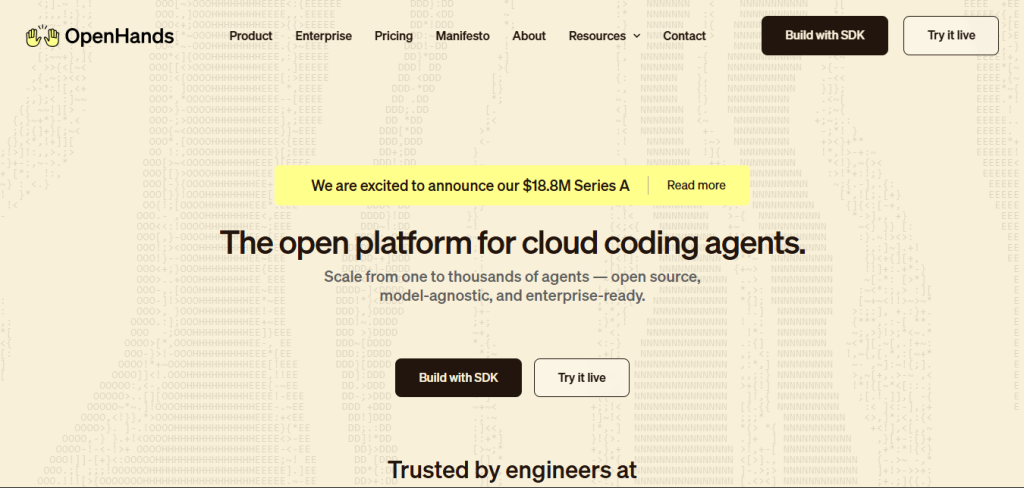
OpenHands has raised $18.8 million in Series A funding, marking one of the strongest signals yet that autonomous software development agents are moving from experimentation into enterprise reality. The round was led by Madrona, Menlo Ventures, Obvious Ventures, Fujitsu Ventures, and Alumni Ventures, backing a team determined to redefine how companies write, ship, and maintain software at scale.
Founded by Robert Brennan, OpenHands is emerging as a pivotal player in the shift toward AI-driven engineering. While most developer tools automate tasks around coding, OpenHands focuses on something deeper: creating agents capable of reasoning, planning, debugging, and executing workflows with minimal human supervision. The company isn’t trying to replace engineers - it's building the infrastructure that lets teams scale engineering output without scaling headcount at the same rate.
The Problem: Software Engineering Demand Is Outpacing Talent
Every modern company is now a software company, regardless of industry. Yet engineering teams are burning out, backlogs are growing, and time-to-market pressures keep rising. Global developer shortage projections estimate a deficit of 4.3 million engineers by 2030, while enterprise codebases grow more complex every year.
SaaS companies report spending 30–50% of engineering time on maintenance rather than innovation. Cloud configuration, refactoring, dependency updates, internal tooling, and repetitive fixes drain resources and slow down progress.
Enterprises don’t just need more engineers - they need a system that helps their existing teams deliver at 2–3x the output without sacrificing quality.
This is the core problem OpenHands is addressing.
What OpenHands Is Actually Building
OpenHands agents operate like autonomous teammates that can:
- Interpret large codebases and documentation
- Break tasks into logical steps
- Execute code, resolve errors, and validate results
- Produce clean pull requests aligned with engineering standards
Instead of functioning like a chat assistant that generates code snippets, OpenHands fits into real developer workflows - CI/CD pipelines, issue queues, and review processes. Teams keep the decision-making authority; the agent handles the execution.
This seamless integration creates a quiet but powerful shift inside organizations: the moment repetitive engineering work becomes predictable enough for a machine to handle, teams begin redesigning their entire development process around higher-impact work.
And this is where the deeper insight emerges - the companies adopting autonomous coding agents aren’t just improving efficiency. They’re fundamentally remapping how software development operates. When an organization begins expecting agents to complete 20–40% of their recurring tasks, planning changes. Sprints shrink. Technical debt stops snowballing. Teams start thinking in terms of velocity systems rather than headcount. The agent becomes part of the operating model, not just the tooling.
Once this happens, dependency deepens. Codebases evolve around the agent’s workflow, internal processes shift, and the company begins treating autonomous execution as infrastructure. And infrastructure, once embedded, rarely gets replaced. That’s where OpenHands’ long-term defensibility grows - not from novelty, but from becoming the unseen backbone that holds engineering throughput together.
A Shift in How Software Will Be Built
The timing couldn’t be sharper. Enterprise demand for AI development tools has surged more than 170% since 2023, and over 85% of CTOs now say AI will be essential to their engineering strategy within the next three years.
But here’s where the industry insight becomes especially important for founders:
Companies adopting autonomous development agents aren’t simply improving productivity - they are changing their operating model. When recurring tasks, low-risk tickets, and repetitive workflows are handled by a machine layer, teams redesign their project planning entirely:
- Sprint cycles shorten
- Roadmaps widen
- Code maintenance stops being a tax
- Innovation unblocks faster
- Engineering costs decline relative to output
This isn’t just “AI for developers.” It’s infrastructure that shifts the economics of building software.
And once a company integrates agents into its repo and tooling, the dependency deepens. Code, tests, and configuration become tied to the agent’s workflow. Output expectations recalibrate around its capabilities. That embeddedness is where long-term defensibility for OpenHands grows - once these agents become part of an engineering organization’s muscle memory, unwinding them is almost impossible.
Why Investors Are Leaning In Now
The AI agent market is forecasted to surpass $45 billion by 2030, driven by enterprise-scale adoption. Meanwhile, engineering budgets are growing only marginally year over year, forcing CTOs to search for leverage, not headcount expansions.
This combination of constraints and opportunity is exactly what high-caliber venture firms look for:
- A massive market (software development)
- A structural bottleneck (talent scarcity)
- A transformative technology (autonomous agents)
- A team with deep domain mastery
The investor lineup around OpenHands reads like a who’s who of firms that bet early on platform shifts - cloud, dev tools, and AI. Their participation signals confidence not just in OpenHands’ technology, but in the inevitability of autonomous engineering becoming a standard.
The Road Ahead
With fresh Series A capital, OpenHands is expected to accelerate:
- Expansion of agent capabilities across languages and frameworks
- Deeper integrations with GitHub, GitLab, and enterprise CI/CD
- Enterprise-grade security, audit systems, and model safety
- Scaling the platform for large, multi-repo organizations
The company’s long-term ambition is clear: to become the central execution layer for software development inside enterprises. A system where engineers guide strategy, and agents handle the grind.
OpenHands isn’t just building a product - it’s shaping the next era of how software gets built.
Related Articles

Latest Rounds
November 30, 2025 by 
EcoG Raises $18.57M to Accelerate the Operating System for the Global EV Charging Economy
EcoG has raised $18,573,280 in new funding, led by GET Fund with participation from Extantia Capital and Bayern Kapital. Founded...
Read More
Latest Rounds
November 30, 2025 by
Tidalwave Raises $22M Series A to Build the Infrastructure Layer Modern Homebuilders Need for AI-Driven Operations
Tidalwave has raised $22,000,000 in their Series A, led by Permanent Capital with participation from D.R. Horton, Inc. and Engineering...
Read More
Latest Rounds
November 30, 2025 by
WellBeam Raises $10M to Unify Care Coordination Across the Entire Patient Journey
WellBeam Inc. has secured $10 million in Series A funding, marking a major step toward fixing one of the most...
Read More
Latest Rounds
November 30, 2025 by
Automat Raises $15.5M to Redefine Industrial Automation With Adaptive AI
Automat has secured $15.5 million in Series A funding, a major milestone for a company working to radically transform how...
Read More
Latest Rounds
November 30, 2025 by
Poly Raises $8M to Reinvent How People Organize, Search, and Think With Their Files
Poly (US) has closed an $8,000,000 Seed round, marking a decisive moment for one of the most ambitious productivity startups...
Read More
Latest Rounds
November 30, 2025 by
Voio Raises $8.6M to Power AI That Understands Patients as Individuals, Not Data Points
Voio has secured $8.6 million in Seed funding, marking a major step forward for a company working to bring true...
Read More
Latest Rounds
November 30, 2025 by
Ember Raises $4.3M to Reinvent AI-Driven Revenue Cycle Management for Healthcare Providers
Ember has secured $4.3 million in Seed funding, marking a major step toward transforming one of healthcare’s most expensive, error-prone,...
Read More
Latest Rounds
November 30, 2025 by
Modern Life Raises $20M to Redefine Life Insurance Infrastructure With AI-Powered Tools for Advisors
Modern Life has secured $20 million in new funding, marking another major milestone in its mission to rebuild the fractured,...
Read More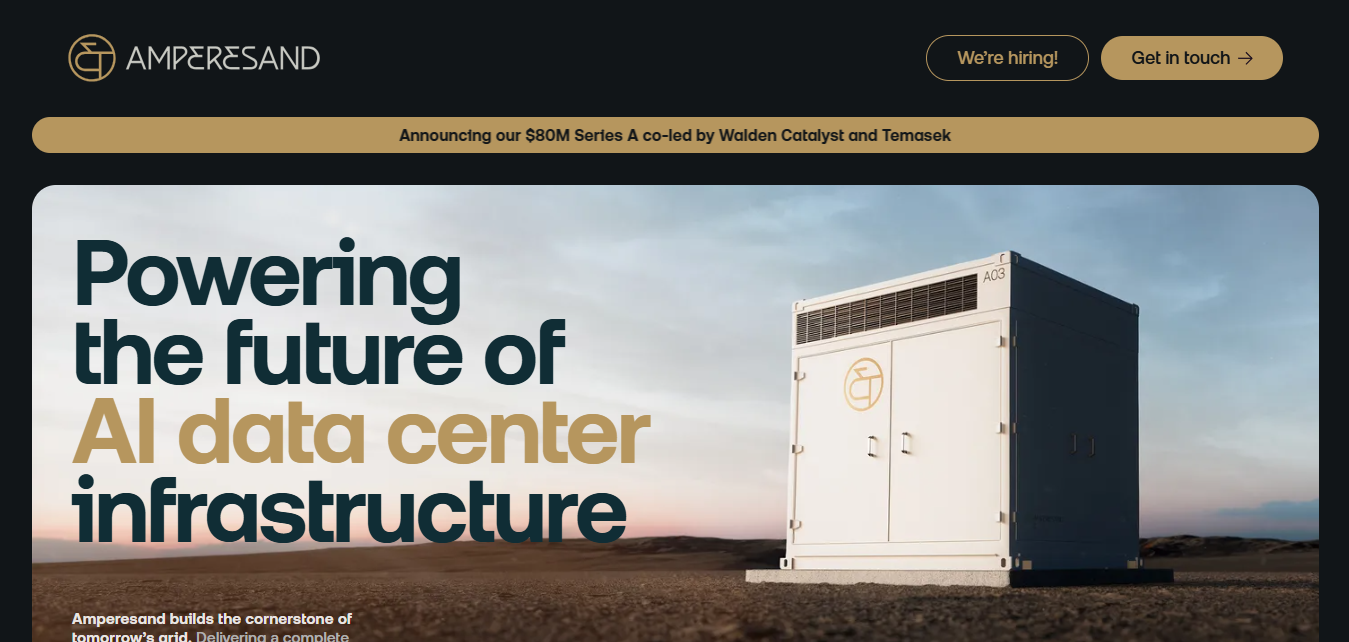
Latest Rounds
November 30, 2025 by
Ampersand Raises $80M to Power the Next Era of High-Performance Materials
Ampersand has secured a major $80 million Series A round, positioning itself as one of the most significant deep-tech companies...
Read More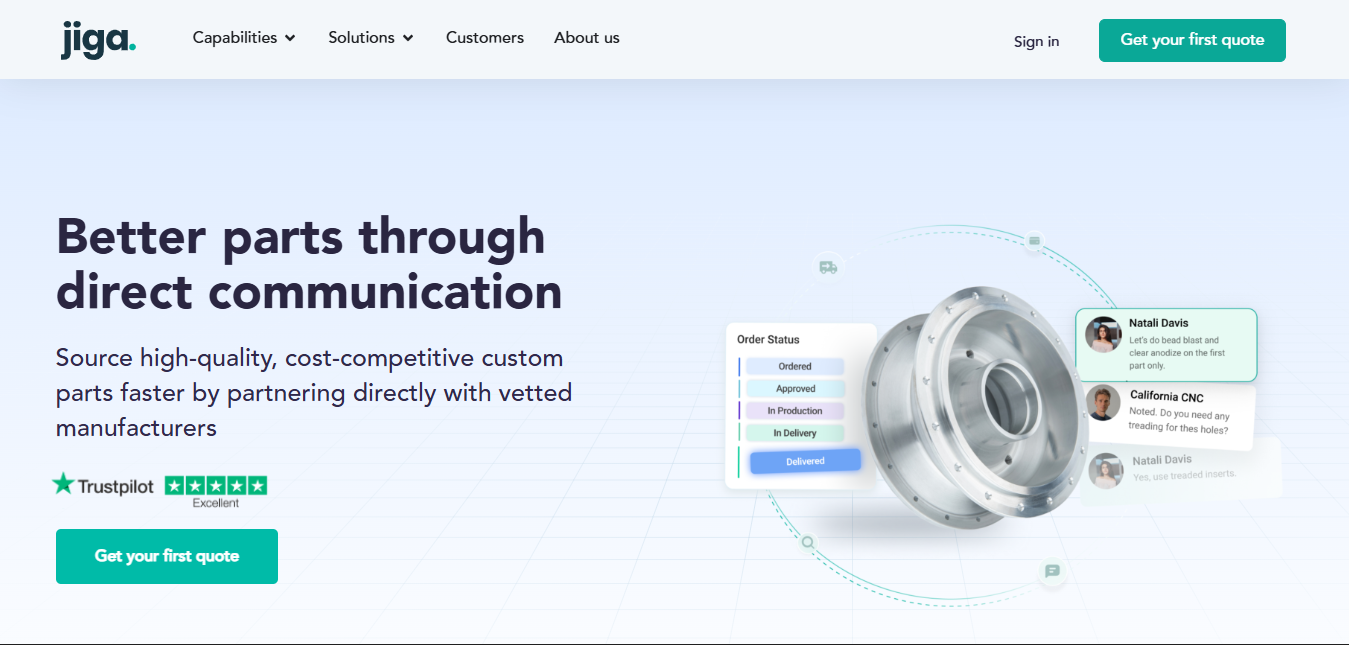
Latest Rounds
November 30, 2025 by
Jiga Raises $12M to Transform Manufacturing Procurement Into a Modern, Data-Driven Workflow
Jiga has raised $12 million in Seed funding, marking a major shift in the way hardware and manufacturing teams collaborate...
Read More