
Automat Raises $15.5M to Redefine Industrial Automation With Adaptive AI
November 30, 2025
by
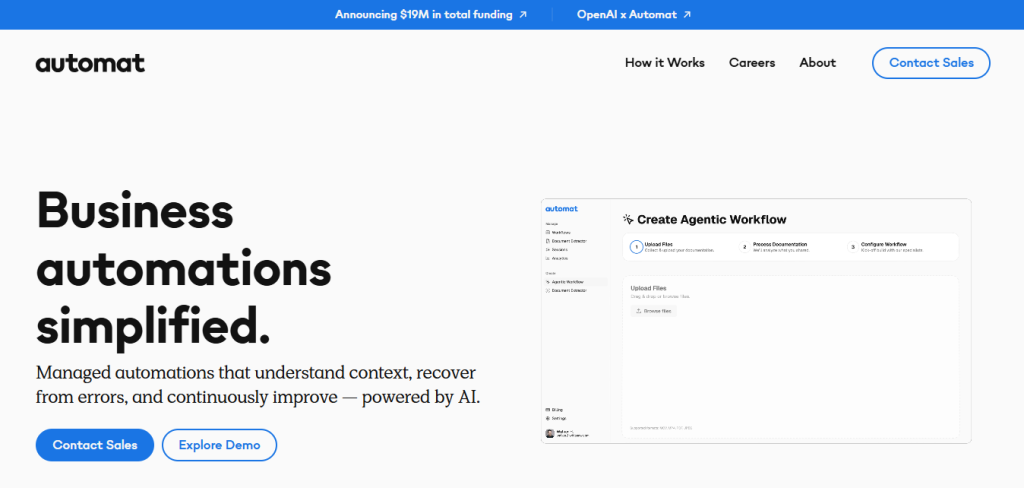
Automat has secured $15.5 million in Series A funding, a major milestone for a company working to radically transform how factories think, adapt, and operate. The round includes participation from Felicis, Initialized Capital, Khosla Ventures, and Y Combinator, positioning Automat among the strongest-backed startups in the industrial AI ecosystem.
Founded by Lucas Ochoa, Automat builds adaptive AI systems that help manufacturers automate complex workflows that traditional robotics simply cannot handle. Instead of relying on rigid programming, Automat develops models that learn from operator demonstrations, improve through repetition, and generalize to new tasks. This approach unlocks automation in environments where variability, irregularity, and constant change have historically made robotics too inflexible to scale.
Manufacturers are under pressure to meet rising demand, manage labor shortages, and reduce costs - all while facing unpredictable supply chains. Automat is emerging as a solution in a sector where operational resilience now matters as much as output.
The Industrial Automation Gap
Even with all the talk about manufacturing modernization, most factories still rely heavily on manual labor. The numbers are striking:
- Over 65% of manufacturing tasks remain unautomated because they involve variability that traditional robots can't handle.
- The industrial automation market is projected to reach $400 billion by 2030, growing at nearly 9% annually.
- Labor shortages continue to deepen - 2.1 million manufacturing jobs in the U.S. are expected to go unfilled by 2030.
- Unplanned downtime costs manufacturers up to $50 billion every year.
Rigid automation can’t bridge this gap. Manufacturers need systems that can learn, adapt, and collaborate with human workers - not replace them. That’s where Automat differentiates itself.
What Automat Is Building
Automat builds AI models that observe how humans perform tasks, learn the underlying decision patterns, and replicate them with precision. These models can adjust to changing product shapes, shifting lighting conditions, new materials, and unpredictable environments - something fixed-program robots cannot do.
Key capabilities include:
- Vision-based understanding of dynamic environments
- Learning from human demonstrations
- Rapid adaptation to new workflows
- Continuous improvement without reprogramming
- Seamless integration into existing industrial systems
Instead of installing rigid automation cells that require expensive engineering work, manufacturers can deploy flexible AI that evolves with production needs.
Early results show promise. In pilot deployments, Automat has demonstrated up to 40% faster cycle times, significant reductions in defects, and major improvements in uptime - metrics that compound rapidly across an entire facility.
The Insight Driving Automat’s Advantage
A defining shift is underway in industrial AI:
Once a factory begins relying on adaptive intelligence for everyday operations, the AI doesn’t just automate tasks - it starts shaping how the factory itself works.
This is where Automat’s strategy becomes especially powerful. As its models learn the nuances of each environment, they accumulate operational memory - context about products, patterns, workflows, and exceptions. Over time, factories begin coordinating their processes around what the AI sees, predicts, and optimizes. At that point, Automat becomes more than a tool. It becomes the backbone that production flow depends on.
And when an AI system holds the institutional knowledge of a facility, switching becomes nearly impossible. Factories aren’t just buying automation - they’re buying intelligence that grows more valuable every week it's used. This is one of the strongest forms of defensibility a startup can build in a historically conservative industry.
Why Investors Are Betting Big on Automat
The investor roster behind this round is a strong signal of market conviction:
- Felicis has a track record of identifying early AI category leaders.
- Initialized Capital and Khosla Ventures are known for backing transformative, infrastructure-level technologies.
- Y Combinator provides the community and support structure to accelerate adoption in legacy industries.
What unites these firms is a belief that the next wave of manufacturing innovation won’t be driven by hardware - it will be driven by intelligence that adapts to the physical world.
Why Automat Is Entering the Market at the Perfect Moment
Several macro trends make this the ideal time for Automat:
- Factories are shifting from rigid automation to hybrid human–AI collaboration.
- The cost of downtime and defects has climbed sharply due to volatile supply chains.
- Governments worldwide are pushing for manufacturing reshoring, increasing demand for efficient automation.
- AI adoption in industrial settings is expected to grow over 20% annually through 2030.
Manufacturers that once viewed automation as optional now see it as essential for survival. And flexible, learning-based systems like Automat’s are finally unlocking automation in categories previously considered impossible.
What Comes Next for Automat
With fresh Series A funding, Automat plans to:
- Expand deployments across North America and Europe
- Build new adaptive models for additional manufacturing verticals
- Deepen integrations with robotics partners
- Scale its engineering and field operations teams
- Grow its learning dataset across diverse factory environments
The long-term vision is clear: create a world where factories no longer rely on brittle automation and instead operate on adaptive, evolving intelligence that continually strengthens production.
Automat isn’t just upgrading manufacturing - it’s redefining how industrial work is learned, executed, and scaled.
Related Articles

Latest Rounds
November 30, 2025 by 
EcoG Raises $18.57M to Accelerate the Operating System for the Global EV Charging Economy
EcoG has raised $18,573,280 in new funding, led by GET Fund with participation from Extantia Capital and Bayern Kapital. Founded...
Read More
Latest Rounds
November 30, 2025 by
Tidalwave Raises $22M Series A to Build the Infrastructure Layer Modern Homebuilders Need for AI-Driven Operations
Tidalwave has raised $22,000,000 in their Series A, led by Permanent Capital with participation from D.R. Horton, Inc. and Engineering...
Read More
Latest Rounds
November 30, 2025 by
WellBeam Raises $10M to Unify Care Coordination Across the Entire Patient Journey
WellBeam Inc. has secured $10 million in Series A funding, marking a major step toward fixing one of the most...
Read More
Latest Rounds
November 30, 2025 by
Poly Raises $8M to Reinvent How People Organize, Search, and Think With Their Files
Poly (US) has closed an $8,000,000 Seed round, marking a decisive moment for one of the most ambitious productivity startups...
Read More
Latest Rounds
November 30, 2025 by
Voio Raises $8.6M to Power AI That Understands Patients as Individuals, Not Data Points
Voio has secured $8.6 million in Seed funding, marking a major step forward for a company working to bring true...
Read More
Latest Rounds
November 30, 2025 by
Ember Raises $4.3M to Reinvent AI-Driven Revenue Cycle Management for Healthcare Providers
Ember has secured $4.3 million in Seed funding, marking a major step toward transforming one of healthcare’s most expensive, error-prone,...
Read More
Latest Rounds
November 30, 2025 by
Modern Life Raises $20M to Redefine Life Insurance Infrastructure With AI-Powered Tools for Advisors
Modern Life has secured $20 million in new funding, marking another major milestone in its mission to rebuild the fractured,...
Read More
Latest Rounds
November 30, 2025 by
Ampersand Raises $80M to Power the Next Era of High-Performance Materials
Ampersand has secured a major $80 million Series A round, positioning itself as one of the most significant deep-tech companies...
Read More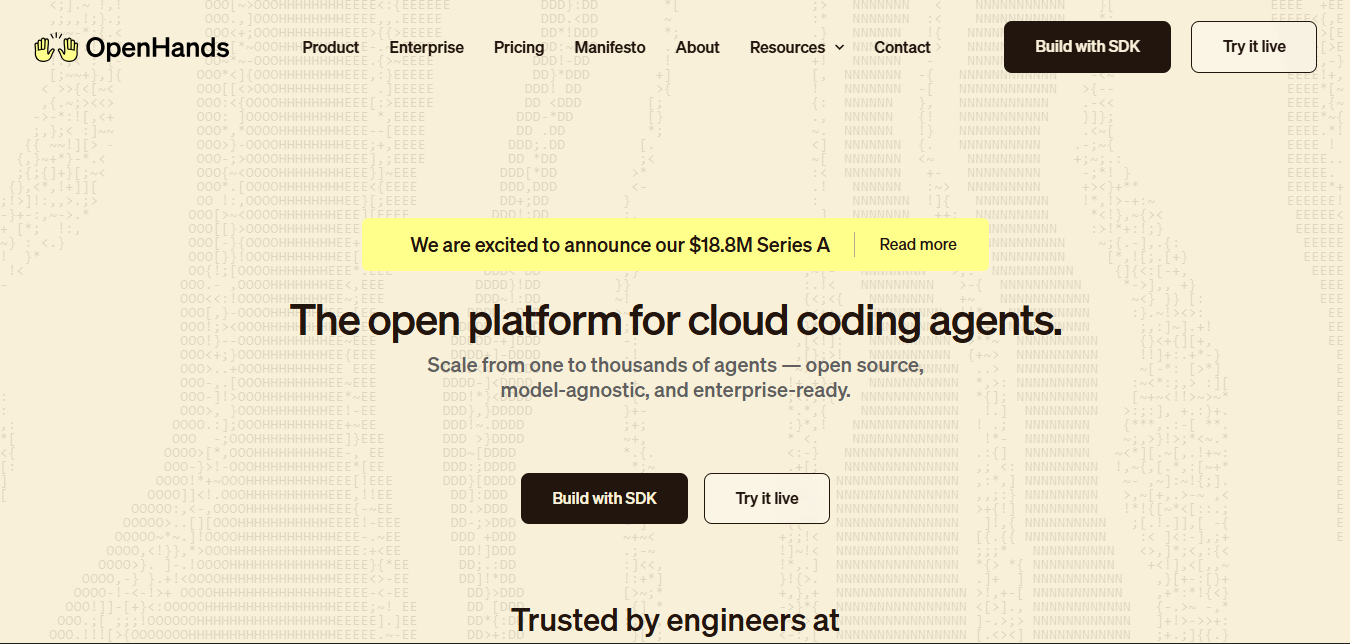
Latest Rounds
November 30, 2025 by
OpenHands Raises $18.8M to Bring Autonomous Coding Agents Into the Enterprise
OpenHands has raised $18.8 million in Series A funding, marking one of the strongest signals yet that autonomous software development...
Read More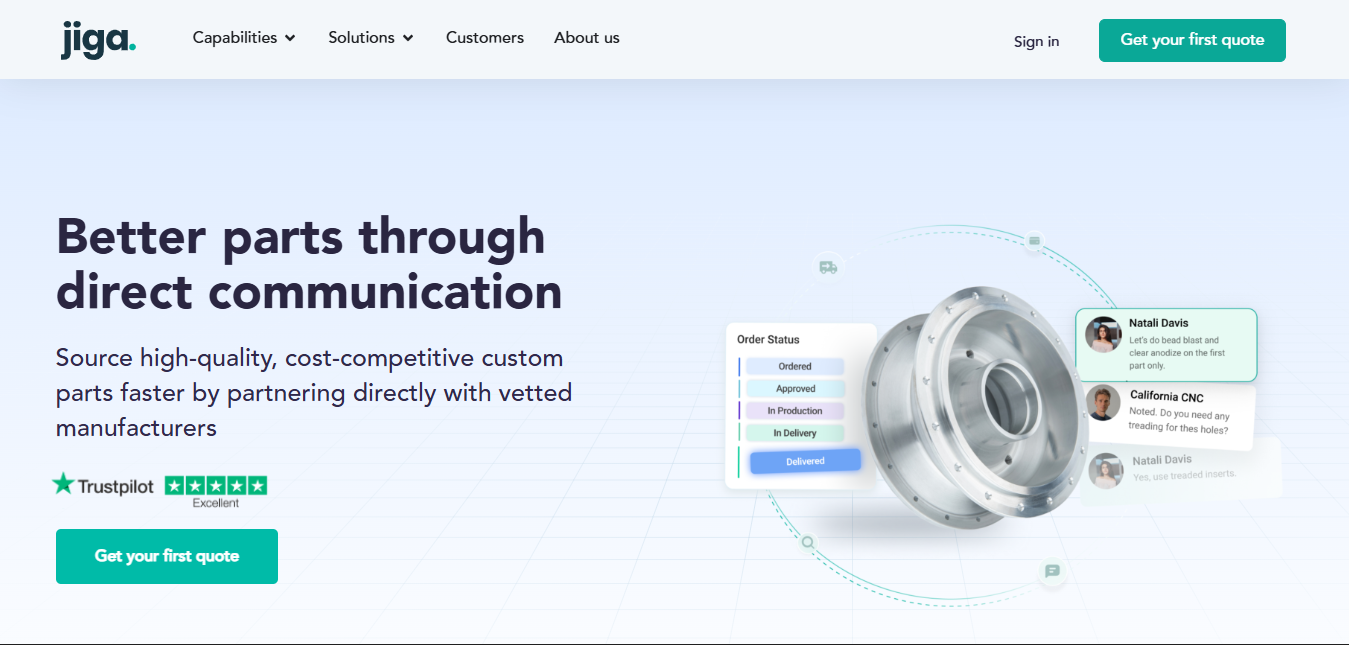
Latest Rounds
November 30, 2025 by
Jiga Raises $12M to Transform Manufacturing Procurement Into a Modern, Data-Driven Workflow
Jiga has raised $12 million in Seed funding, marking a major shift in the way hardware and manufacturing teams collaborate...
Read More