
Ember Raises $4.3M to Reinvent AI-Driven Revenue Cycle Management for Healthcare Providers
November 30, 2025
by
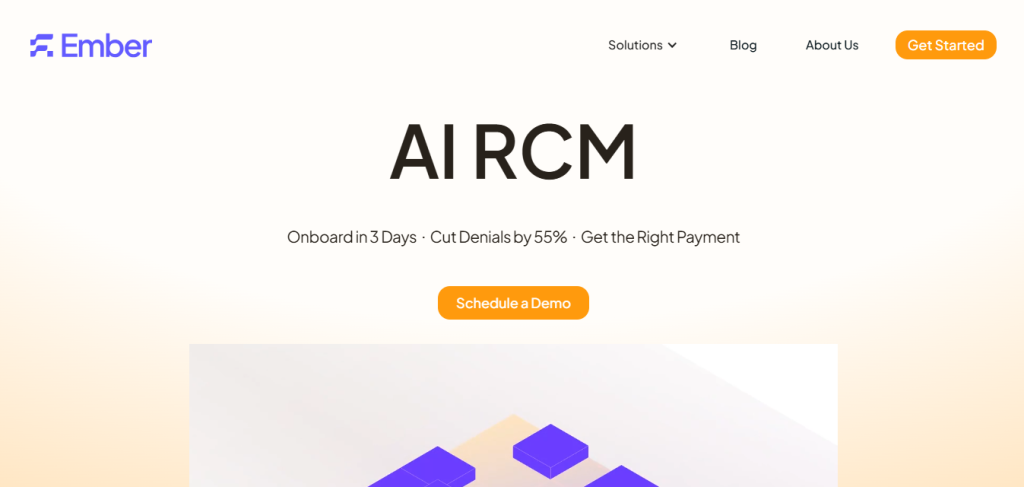
Ember has secured $4.3 million in Seed funding, marking a major step toward transforming one of healthcare’s most expensive, error-prone, and manually overwhelming functions: revenue cycle management (RCM). Led by Nexus Venture Partners with support from Y Combinator, the investment reflects a growing urgency across the U.S. healthcare system—administrative inefficiencies are draining billions, slowing patient care, and exhausting medical teams. Ember’s AI-powered RCM platform aims to reverse that trend.
Founded by Charlene Wang, Ember focuses on delivering fast onboarding, fewer denials, and clean claims from day one. Their system isn’t just digitizing existing workflows—it’s reengineering RCM into a data-driven engine where insurance decisions are predicted, errors are prevented, and providers get paid faster.
The RCM Crisis Ember Is Solving
Revenue cycle inefficiency has quietly become one of the biggest financial sinks in U.S. healthcare. Providers lose money long before a claim even reaches an insurer.
Across hospitals and clinics:
- Between 10–25% of medical claims are denied or delayed
- Administrative tasks consume up to 40% of a provider’s work time
- The U.S. spends over $500 billion yearly on healthcare administration alone
- Billing errors lead to $262 billion in lost revenue every year
Most RCM teams operate with outdated tools, manual follow-ups, and inconsistent payer rules. Small practices suffer the most—they often don’t have the staff, training, or time to keep up.
Ember’s promise is simple: RCM that works as fast as healthcare needs it to.
The platform cuts denials by predicting them in advance, surfaces billing issues before submission, and automates follow-ups that would normally take days. For clinics struggling with cash flow, these improvements are transformative.
What Ember Actually Builds
Ember offers an AI-powered RCM engine designed to handle onboarding, verification, claims submission, denial management, and payment reconciliation from a single hub.
Key capabilities include:
- Claims accuracy scoring
- Automated verification and coding suggestions
- Real-time payer rule updates
- Denial prediction and prevention
- Seamless onboarding in as little as three days
But the deeper innovation lies in how Ember connects the pieces. Instead of patching a broken process, Ember integrates thousands of payer patterns, clinical workflows, and billing rules into one continuously learning model. RCM becomes a proactive system, not a reactive one.
Providers interact with a calm, clear dashboard instead of messy spreadsheets and unpredictable queues. Ember compresses weeks of administrative back-and-forth into a structured, predictable flow.
The Insight That Enhances Ember’s Advantage
As Ember embeds itself into a clinic’s billing operations, a powerful shift happens behind the scenes: every claim processed trains the system to become smarter, faster, and more tailored to that provider’s unique patterns.
This kind of compounding is rare outside healthcare. RCM doesn’t just have volume—it has repetition across similar workflows, insurers, and clinical contexts. That means Ember’s prediction accuracy improves continuously, eventually surpassing what even the most experienced billing specialists can maintain manually.
Founders often underestimate how valuable these “operational feedback loops” are. Once a platform becomes the brain behind an organization’s financial operations, switching becomes almost impossible—not because of lock-in, but because the system becomes uniquely calibrated to that organization. Ember isn’t just processing claims; it is learning the provider’s financial behavior.
That learning curve is Ember’s moat.
Why Investors Are Betting Big on Ember
The healthcare RCM market is massive and accelerating:
- The global RCM market is projected to reach $250 billion by 2030
- AI-enabled RCM is among the fastest-growing sub-segments with a ~26% CAGR
- 1 in 4 healthcare organizations plan to replace or upgrade their RCM tech within the next two years
- Staffing shortages have pushed over 60% of clinics to seek automated billing tools
What Ember is offering lines up directly with these shifts.
Investors are backing startups that replace bloated administrative workflows with intelligence—platforms that cut overhead, boost revenue, and eliminate burnout. Ember isn’t building a marginal improvement; it’s tackling a $500B problem at its root.
How Ember Fits Into the Future of Healthcare Operations
Healthcare is entering a phase where operational efficiency and financial stability determine survival. Smaller providers, especially, face growing pressure from insurers, large health systems, and staffing shortages.
Ember gives them capabilities that were previously out of reach:
- hospital-grade billing intelligence
- faster onboarding than legacy RCM vendors
- predictive denial reduction—not just post-denial appeals
- AI-backed visibility into billing bottlenecks
- automated workflows without hiring more staff
For clinics and specialty practices, Ember becomes both a billing assistant and a safety net.
And as more clinics rely on AI-based RCM, standards across the industry will shift toward preventive financial management rather than reactive troubleshooting.
Ember sits at that inflection point.
What’s Next for Ember
With the new funding, Ember plans to accelerate several critical areas:
- Expansion into more payer networks
- Enhanced prediction engines tailored to specialties
- Automated appeals and audit-ready documentation
- Scalable onboarding for multi-location practices
- Deeper revenue analytics for real-time financial forecasting
The company’s long-term goal is clear: to become the operating backbone of financial workflows across the healthcare ecosystem.
As healthcare complexity increases, Ember offers providers something they desperately need—predictability, accuracy, and financial stability.
Related Articles

Latest Rounds
November 30, 2025 by 
EcoG Raises $18.57M to Accelerate the Operating System for the Global EV Charging Economy
EcoG has raised $18,573,280 in new funding, led by GET Fund with participation from Extantia Capital and Bayern Kapital. Founded...
Read More
Latest Rounds
November 30, 2025 by
Tidalwave Raises $22M Series A to Build the Infrastructure Layer Modern Homebuilders Need for AI-Driven Operations
Tidalwave has raised $22,000,000 in their Series A, led by Permanent Capital with participation from D.R. Horton, Inc. and Engineering...
Read More
Latest Rounds
November 30, 2025 by
WellBeam Raises $10M to Unify Care Coordination Across the Entire Patient Journey
WellBeam Inc. has secured $10 million in Series A funding, marking a major step toward fixing one of the most...
Read More
Latest Rounds
November 30, 2025 by
Automat Raises $15.5M to Redefine Industrial Automation With Adaptive AI
Automat has secured $15.5 million in Series A funding, a major milestone for a company working to radically transform how...
Read More
Latest Rounds
November 30, 2025 by
Poly Raises $8M to Reinvent How People Organize, Search, and Think With Their Files
Poly (US) has closed an $8,000,000 Seed round, marking a decisive moment for one of the most ambitious productivity startups...
Read More
Latest Rounds
November 30, 2025 by
Voio Raises $8.6M to Power AI That Understands Patients as Individuals, Not Data Points
Voio has secured $8.6 million in Seed funding, marking a major step forward for a company working to bring true...
Read More
Latest Rounds
November 30, 2025 by
Modern Life Raises $20M to Redefine Life Insurance Infrastructure With AI-Powered Tools for Advisors
Modern Life has secured $20 million in new funding, marking another major milestone in its mission to rebuild the fractured,...
Read More
Latest Rounds
November 30, 2025 by
Ampersand Raises $80M to Power the Next Era of High-Performance Materials
Ampersand has secured a major $80 million Series A round, positioning itself as one of the most significant deep-tech companies...
Read More
Latest Rounds
November 30, 2025 by
OpenHands Raises $18.8M to Bring Autonomous Coding Agents Into the Enterprise
OpenHands has raised $18.8 million in Series A funding, marking one of the strongest signals yet that autonomous software development...
Read More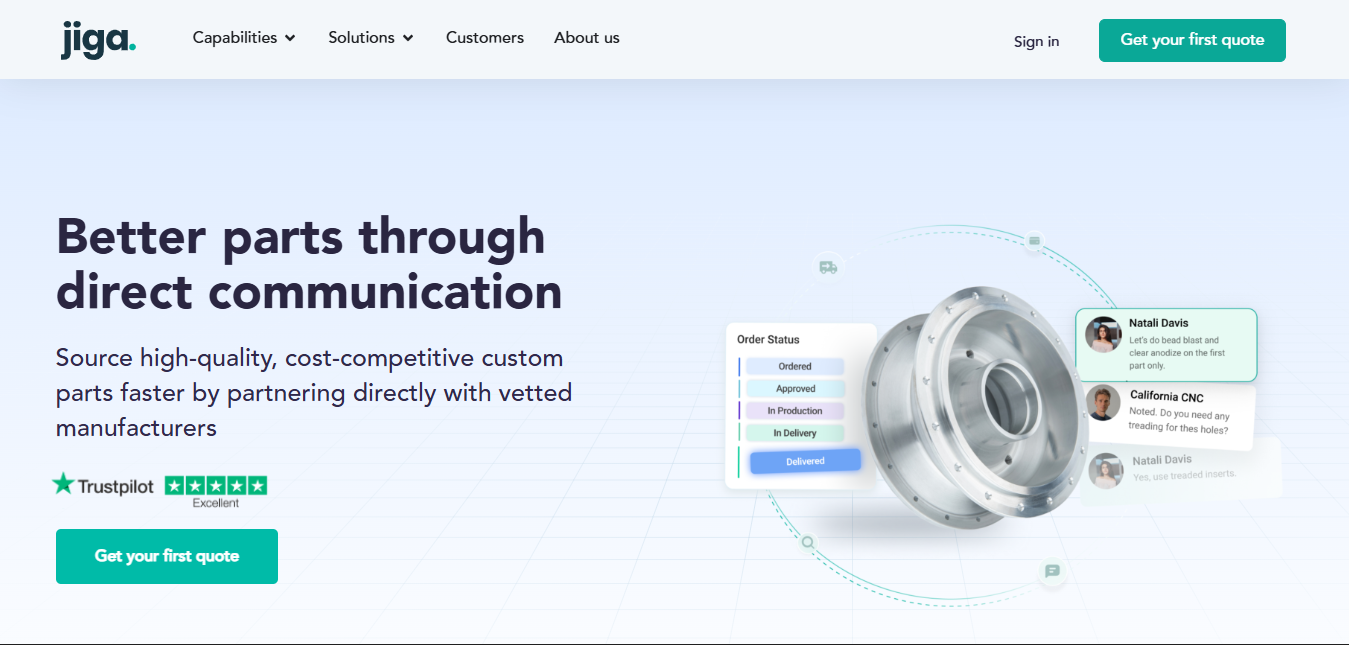
Latest Rounds
November 30, 2025 by
Jiga Raises $12M to Transform Manufacturing Procurement Into a Modern, Data-Driven Workflow
Jiga has raised $12 million in Seed funding, marking a major shift in the way hardware and manufacturing teams collaborate...
Read More