
Jiga Raises $12M to Transform Manufacturing Procurement Into a Modern, Data-Driven Workflow
November 30, 2025
by
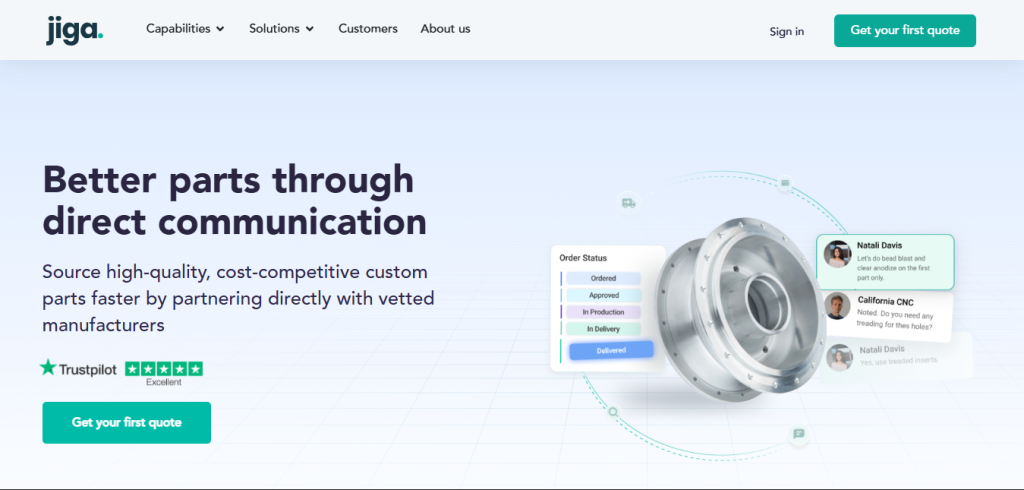
Jiga has raised $12 million in Seed funding, marking a major shift in the way hardware and manufacturing teams collaborate with suppliers. The round - backed by Aleph, Symbol, and Y Combinator - cements Jiga’s position as one of the fastest-rising platforms modernizing procurement, an area of operations that has historically resisted digital transformation.
Founded by Adar Hay, Jiga set out to remove one of the biggest bottlenecks in manufacturing: slow, fragmented supplier communication. Most procurement teams still rely on spreadsheets, email threads, PDF quotes, and manual follow-ups - an outdated workflow that drains time and causes costly production delays. Jiga replaces that with a centralized platform where teams can request quotes, compare suppliers, manage orders, and track production - all in one system.
The timing couldn’t be better. Global manufacturing is under pressure: supply chain volatility, tightening production cycles, and rapid hardware iteration have pushed teams to find tools that eliminate friction. Jiga offers that reliability in a category where reliability hasn’t always existed.
The Procurement Problem No One Talks About
Manufacturing teams are the backbone of hardware innovation, yet their operational tools often lag behind the software used by product and engineering teams. Internal procurement processes are typically:
- Siloed across dozens of communication channels
- Dependent on tribal knowledge, not structured workflows
- Prone to quote inconsistencies and vendor misalignment
Studies show the average hardware team loses 20–40% of production time to manual procurement tasks alone. That delay ripples through entire organizations - slowing engineering handoffs, increasing costs, and pushing product launches weeks or even months behind schedule.
At the same time, manufacturing complexity is rising. The number of custom components per hardware build has increased by about 30% over the past decade, requiring tighter coordination with suppliers. But coordination can’t scale when communication methods don’t.
Jiga’s infrastructure pulls these scattered processes into a unified operational layer.
What Jiga Actually Builds
Jiga provides a workflow engine built for how hardware teams really operate. It centralizes:
- Quote requests
- Supplier evaluations
- Purchase tracking
- Order visibility
- Team collaboration
By connecting procurement, engineering, and suppliers in one place, Jiga reduces the endless cycles of “send file → wait for quote → revise → follow-up → repeat.” Teams operate with clearer timelines, suppliers respond faster, and decision-making relies on consistent, comparable data - not guesswork.
This is also where the deeper long-term impact appears. Once a procurement platform becomes the hub through which supplier relationships, pricing history, and order data flow, it begins shaping how entire teams plan their production cycles. Engineers start designing parts with clearer cost expectations. Finance teams forecast with greater accuracy. Operations teams shift from reaction to strategy. The workflow itself becomes infrastructure - something a company organizes around, not something it merely uses. When that shift happens, dependency increases, switching costs rise, and the platform becomes part of the organization’s muscle memory. That underlying stickiness is where Jiga’s defensibility grows.
The Market Forces Supporting Jiga's Growth
Manufacturing procurement is a massive but under-digitized market. Global spending on manufacturing components surpassed $4 trillion last year, yet less than 15% of procurement workflows are fully digitized. Analysts expect that figure to double over the next five years, driven by three forces:
- Shorter hardware development cycles. Fast iteration requires faster supplier alignment.
- Supply chain diversification. Teams now work with more suppliers across more regions than ever before.
- Operational cost pressure. CFOs are demanding tools that tighten production efficiency.
Meanwhile, digital manufacturing tools - CAD automation, cloud PLM, and AI-assisted design - are becoming more advanced. But none of these innovations matter if procurement remains a bottleneck. Jiga sits at the intersection where manufacturing, supply chain, and operations meet - a point of increasing strategic importance.
VC investment in manufacturing-tech has climbed by more than 200% since 2020, signaling a broader shift toward modern operations infrastructure. Investors backing Jiga specialize in systems that scale across entire industries, not just single companies.
Why Teams Are Adopting Jiga So Quickly
Speed is one factor, but predictability is the bigger one. Jiga reduces quote turnaround time from days to hours in many cases, helping teams build more consistent production timelines. The platform also gives procurement teams clearer visibility into:
- Supplier reliability
- Historical pricing
- Order accuracy
- Performance benchmarks
This reduces risk - something deeply valued in hardware development, where mistakes are expensive and delays compound quickly.
The platform’s collaborative environment also makes cross-functional work smoother. Engineers can attach design files directly, procurement can compare quotes instantly, and suppliers work with standardized requests rather than piecemeal instructions.
Where Jiga Goes From Here
With new funding, Jiga is expected to accelerate platform expansion, including:
- Deeper integrations with CAD, PLM, and ERP software
- More analytics tools that surface price trends and supplier insights
- Automated procurement recommendations powered by historical data
- Expansion into more manufacturing categories beyond prototypes
The long-term opportunity is clear. If Jiga becomes the operating system for procurement, it will not just streamline processes - it will influence how hardware products get built, priced, and launched.
Manufacturing is moving into a new era, and platforms like Jiga are helping teams move with it.
Related Articles

Latest Rounds
November 30, 2025 by 
EcoG Raises $18.57M to Accelerate the Operating System for the Global EV Charging Economy
EcoG has raised $18,573,280 in new funding, led by GET Fund with participation from Extantia Capital and Bayern Kapital. Founded...
Read More
Latest Rounds
November 30, 2025 by
Tidalwave Raises $22M Series A to Build the Infrastructure Layer Modern Homebuilders Need for AI-Driven Operations
Tidalwave has raised $22,000,000 in their Series A, led by Permanent Capital with participation from D.R. Horton, Inc. and Engineering...
Read More
Latest Rounds
November 30, 2025 by
WellBeam Raises $10M to Unify Care Coordination Across the Entire Patient Journey
WellBeam Inc. has secured $10 million in Series A funding, marking a major step toward fixing one of the most...
Read More
Latest Rounds
November 30, 2025 by
Automat Raises $15.5M to Redefine Industrial Automation With Adaptive AI
Automat has secured $15.5 million in Series A funding, a major milestone for a company working to radically transform how...
Read More
Latest Rounds
November 30, 2025 by
Poly Raises $8M to Reinvent How People Organize, Search, and Think With Their Files
Poly (US) has closed an $8,000,000 Seed round, marking a decisive moment for one of the most ambitious productivity startups...
Read More
Latest Rounds
November 30, 2025 by
Voio Raises $8.6M to Power AI That Understands Patients as Individuals, Not Data Points
Voio has secured $8.6 million in Seed funding, marking a major step forward for a company working to bring true...
Read More
Latest Rounds
November 30, 2025 by
Ember Raises $4.3M to Reinvent AI-Driven Revenue Cycle Management for Healthcare Providers
Ember has secured $4.3 million in Seed funding, marking a major step toward transforming one of healthcare’s most expensive, error-prone,...
Read More
Latest Rounds
November 30, 2025 by
Modern Life Raises $20M to Redefine Life Insurance Infrastructure With AI-Powered Tools for Advisors
Modern Life has secured $20 million in new funding, marking another major milestone in its mission to rebuild the fractured,...
Read More
Latest Rounds
November 30, 2025 by
Ampersand Raises $80M to Power the Next Era of High-Performance Materials
Ampersand has secured a major $80 million Series A round, positioning itself as one of the most significant deep-tech companies...
Read More
Latest Rounds
November 30, 2025 by
OpenHands Raises $18.8M to Bring Autonomous Coding Agents Into the Enterprise
OpenHands has raised $18.8 million in Series A funding, marking one of the strongest signals yet that autonomous software development...
Read More