
Popai Health Raises $11 Million to Build the First Proactive Health Engagement Platform That Patients Actually Use
November 7, 2025
by
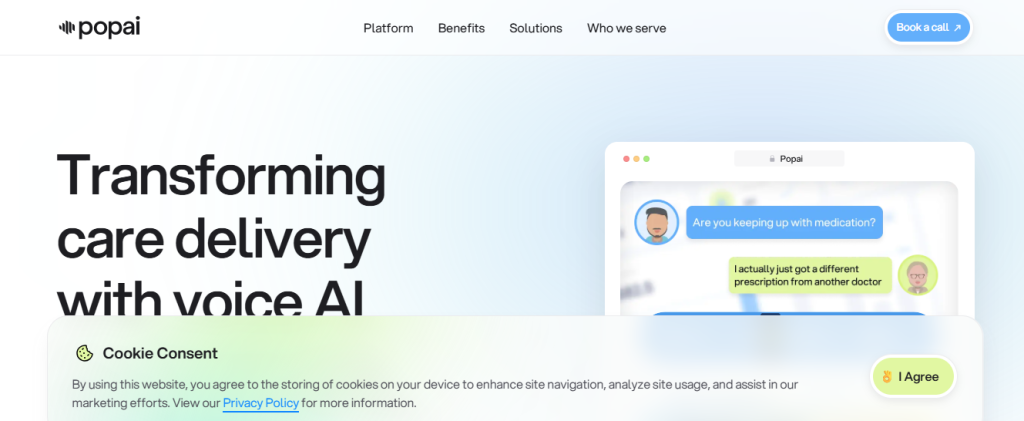
Popai Health has raised $11,000,000 in new funding, backed by Team8 and New Enterprise Associates (NEA) - two firms known for backing category-defining platforms in SaaS and healthtech. Led by founders Eyal Gurion, Michael Latar, and Elad Levy, Popai Health is solving one of healthcare’s most damaging and expensive gaps: patients don’t engage with care once they leave the clinic. Appointments get missed, instructions are forgotten, refills slip through the cracks, and care plans become passive instead of proactive. Popai flips that dynamic. Using conversational automation and personalized engagement sequences, Popai meets patients where they already are - text messaging - and uses behavioral intelligence to keep them on track. Popai isn’t trying to “remind” patients. It drives patient action - at scale - without adding staff burden.
Reframing Patient Engagement: Not “Send a Message” - but “Drive a Clinical Outcome”
Most “patient engagement” tools exist as portals, apps, or emails that assume patients will remember to log in and take action. Reality check: 70% of patients don’t download apps from their care provider, and portal engagement sits below 30% across most health systems. Popai refuses to build engagement on hope. Instead of creating another login-based system, Popai uses conversational automation to guide patients through care plans the same way high-performing customer success teams guide users through product onboarding - step by step, with real-time support and intelligent nudges. The platform automates care follow-through: appointment confirmations, post-discharge check-ins, medication reminders, symptom reporting, referrals, insurance navigation, and even proactive escalations when something looks off. Popai doesn’t track compliance. It engineers it.
Infrastructure Over Coaching: Popai Becomes the Engagement Operating Layer for Care Delivery
Popai is the infrastructure layer between a clinician’s care plan and a patient’s follow-through. The system integrates into EHRs and care coordination tools, then orchestrates patient journeys using automated conversational flows that feel human but scale infinitely. Popai eliminates manual outreach, reduces no-shows, and identifies when patients need help before the problem escalates. In a world where most hospitals are short-staffed and care teams are overwhelmed, Popai operates like a digital care navigator that continuously works in the background. The platform doesn’t replace clinicians - it extends them. When engagement becomes automated, care stops leaking through cracks.
Reduce Patient Friction, Not Patient Responsibility
Here’s the strategic insight founders will appreciate - the thing that separates Popai from every engagement platform before it. The team didn’t try to change patient behavior. They removed friction. Instead of forcing patients into tools they don’t want, Popai plugs into the behavior that already exists: texting. Patients don’t need an app. They don’t need onboarding. They don’t need a login. Popai compresses patient follow-through into micro-actions, guiding them through care plans in ways that feel effortless. In tech, the product that wins is not the most powerful - it’s the one that removes the most resistance.
Investor Alignment: NEA and Team8 Aren’t Chasing Engagement - They’re Betting on Work Reduction
NEA and Team8 have a shared thesis: the next wave of healthcare transformation won’t come from new clinical innovation - it will come from eliminating operational waste. Hospitals aren’t struggling to treat patients. They’re struggling to keep patients engaged without burning out staff. Popai creates leverage. Care teams don’t spend hours calling patients who won’t answer. Automated journeys handle it. If the patient responds with a problem, care teams intervene only when needed. Investors see that Popai isn’t selling engagement software. It’s selling reclaimed clinical capacity.
A Market at Breaking Point - and Prime for Automation
Healthcare engagement is a multi-billion dollar problem disguised as inefficiency. The numbers are brutal:
- U.S. health systems lose over $150 billion a year due to missed appointments alone.
- Nearly 40% of patients never follow through on treatment plans after a visit.
- Hospitals now experience 20% to 35% staff shortages, especially in care coordination.
- 60% of readmissions are tied to preventable lapses in follow-up, communication, or medication adherence.
The industry has thrown portals, apps, and call centers at the problem. Nothing moved the needle because engagement friction remained. Popai didn’t try to convince patients to use the system.
It brought the system to the patient.
Why Popai Wins: Outcomes, Not “Engagement Metrics"
Legacy “patient engagement platforms” brag about open rates and portal logins. Popai measures:
- Appointments attended
- Medications taken
- Symptoms reported
- Follow-ups completed
- Readmissions prevented
When a platform drives action, rather than tracks activity, hospitals don’t need dashboards to see the results - revenue, efficiency, and outcomes make the impact obvious. Popai shifts engagement from a cost center to a performance engine. It’s not about notifying patients. It’s about activating patients.
What’s Next for Popai Health
With $11M secured, Popai is expanding:
- EHR integrations across major hospital systems
- Automated journeys for chronic care, post-op follow-up, and complex specialty pathways
- AI-powered patient understanding (tone, satisfaction, urgency detection)
- Data feedback loops that predict disengagement before it happens
The long-term vision?
Popai becomes the default engagement operating system for healthcare. Every care plan becomes actionable. Every patient becomes supported. Every provider becomes scalable. Popai isn’t building a messaging platform. It’s building the engagement layer the healthcare system has been missing for decades.
Final Thoughts
Healthcare has never suffered from a lack of clinical knowledge.
It has suffered from a lack of follow-through.
Popai Health brings healthcare into the world patients already live in - conversational, proactive, supportive. Patients get clarity. Care teams get capacity. Outcomes improve without forcing anyone to change behavior.
Popai isn’t enhancing engagement.
It’s enabling care adherence.
Related Articles

Latest Rounds
November 30, 2025 by
EcoG Raises $18.57M to Accelerate the Operating System for the Global EV Charging Economy
EcoG has raised $18,573,280 in new funding, led by GET Fund with participation from Extantia Capital and Bayern Kapital. Founded...
Read More
Latest Rounds
November 30, 2025 by
Tidalwave Raises $22M Series A to Build the Infrastructure Layer Modern Homebuilders Need for AI-Driven Operations
Tidalwave has raised $22,000,000 in their Series A, led by Permanent Capital with participation from D.R. Horton, Inc. and Engineering...
Read More
Latest Rounds
November 30, 2025 by 
WellBeam Raises $10M to Unify Care Coordination Across the Entire Patient Journey
WellBeam Inc. has secured $10 million in Series A funding, marking a major step toward fixing one of the most...
Read More
Latest Rounds
November 30, 2025 by
Automat Raises $15.5M to Redefine Industrial Automation With Adaptive AI
Automat has secured $15.5 million in Series A funding, a major milestone for a company working to radically transform how...
Read More
Latest Rounds
November 30, 2025 by
Poly Raises $8M to Reinvent How People Organize, Search, and Think With Their Files
Poly (US) has closed an $8,000,000 Seed round, marking a decisive moment for one of the most ambitious productivity startups...
Read More
Latest Rounds
November 30, 2025 by
Voio Raises $8.6M to Power AI That Understands Patients as Individuals, Not Data Points
Voio has secured $8.6 million in Seed funding, marking a major step forward for a company working to bring true...
Read More
Latest Rounds
November 30, 2025 by
Ember Raises $4.3M to Reinvent AI-Driven Revenue Cycle Management for Healthcare Providers
Ember has secured $4.3 million in Seed funding, marking a major step toward transforming one of healthcare’s most expensive, error-prone,...
Read More
Latest Rounds
November 30, 2025 by
Modern Life Raises $20M to Redefine Life Insurance Infrastructure With AI-Powered Tools for Advisors
Modern Life has secured $20 million in new funding, marking another major milestone in its mission to rebuild the fractured,...
Read More
Latest Rounds
November 30, 2025 by
Ampersand Raises $80M to Power the Next Era of High-Performance Materials
Ampersand has secured a major $80 million Series A round, positioning itself as one of the most significant deep-tech companies...
Read More
Latest Rounds
November 30, 2025 by
OpenHands Raises $18.8M to Bring Autonomous Coding Agents Into the Enterprise
OpenHands has raised $18.8 million in Series A funding, marking one of the strongest signals yet that autonomous software development...
Read More