
Skeletalis Raises $8M to Advance Regenerative Bone Medicine and Transform Orthopedic Care
November 30, 2025
by
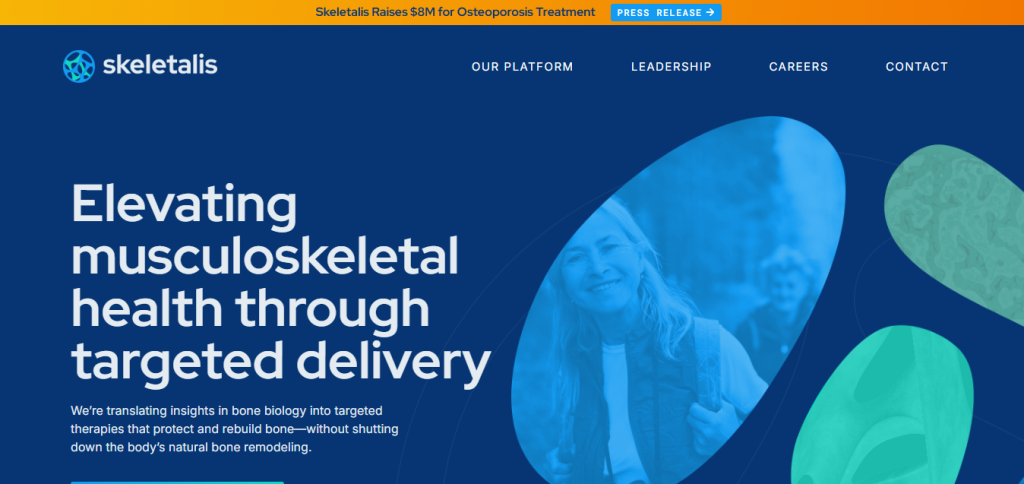
Skeletalis, Inc. has raised $8 million in new funding, marking a significant leap forward for the future of regenerative orthopedics. The round - backed by Pillar VC, KdT Ventures, age1, and Slocum Management - positions the company to accelerate development of its next-generation bone restoration solutions. Led by W. Benton (Ben) Swanson, DDS, PhD, Skeletalis is taking aim at one of the biggest and fastest-growing needs in medicine: repairing, regenerating, and rebuilding skeletal tissue without the limitations of traditional surgical materials.
Orthopedic medicine is at a turning point. Every year, millions of patients suffer fractures, degenerative bone conditions, and surgical bone loss - but current interventions are outdated, invasive, and often slow to heal. Skeletalis’ platform is built to change that trajectory entirely.
Rather than rely on metal implants, grafts, or synthetic fillers, the company is creating biologically intelligent materials with the potential to integrate seamlessly with a patient’s own bone, stimulate natural regeneration, and significantly improve clinical outcomes. For surgeons, this represents a path to faster recovery times and fewer complications. For patients, it represents the possibility of bone healing that feels more like regeneration - and less like repair.
A Market Growing Faster Than Medicine Can Keep Up With
Bone-related medical issues are increasing at an unprecedented pace. Globally, orthopedic procedures now exceed 22 million per year, and the number of fractures is projected to rise by over 60% by 2050 as populations age and chronic conditions increase. In the U.S. alone, bone grafting is a $3.5 billion market, yet nearly 40% of graft procedures still result in complications or delayed healing.
At the same time, regenerative medicine is accelerating. The global regenerative materials market is expected to grow at 20% CAGR through 2030, driven by breakthroughs in biomaterials, tissue engineering, and biologically interactive implants.
This creates a perfect storm of demand:
More fractures. More surgeries. More need for biologically compatible solutions.
And a massive gap between what patients require and what existing materials can accomplish.
Skeletalis is operating directly in that gap.
The Scientific Edge Driving Skeletalis Forward
Dr. Swanson’s background brings a rare combination of dentistry, surgical science, and biomedical research - giving the company a unique vantage point on problems most founders only see from one angle. His work centers on designing regenerative scaffolds that mimic natural bone structure, activate healing pathways, and bond more effectively with the patient’s biology.
Instead of simply filling a defect, the company's materials are engineered to become part of the healing process itself.
And this is where Skeletalis gains an advantage most early-stage medtech startups never reach: the point where clinical reliance begins to form. Once surgeons develop preference for a material - because of shorter operating times, reduced failure rates, or improved recovery - that preference tends to become anchored into practice patterns. Hospitals standardize purchasing, surgical teams train around it, and outcomes data compounds over time.
When a medical product becomes part of the standard of care, switching costs rise dramatically. That shift - from “promising technology” to “clinical infrastructure” - is where category-defining companies are built, and Skeletalis is already laying that groundwork.
Why the Investment Community Is Paying Attention
Medtech investors are increasingly focused on companies that solve structural clinical problems rather than incremental ones. Bone regeneration is exactly that:
a high-cost, high-complication, high-volume challenge desperately in need of innovation.
Other factors intensifying investor interest include:
- An aging population: by 2034, older adults will outnumber children in the U.S.
- A surge in chronic diseases like osteoporosis affecting 200 million people worldwide.
- Hospitals shifting toward value-based care, where improving healing speed has direct financial impact.
With this $8M round, Skeletalis can accelerate manufacturing, conduct broader preclinical studies, establish surgeon advisory networks, and begin positioning its technology for regulatory pathways. For a category with high scientific barriers and high clinical demand, timing is everything - and Skeletalis appears to be entering the market at the exact moment regenerative materials are transitioning from experimental to essential.
What’s Next for Skeletalis
The company is now building toward three key milestones that will define its trajectory:
- Advancing its regenerative biomaterials pipeline to target multiple orthopedic use cases, from trauma to dental reconstruction.
- Scaling production capabilities to meet early clinical demand and prepare for larger trials.
- Expanding partnerships with research institutions, surgeons, and hospitals to validate outcomes and accelerate adoption.
The long-term vision is clear: a future where bone loss isn’t a lifelong condition, but a biological process the body can repair - with engineered materials that help it do exactly that.
Skeletalis is not just developing a product; it’s shaping the next era of orthopedic healing.
Related Articles

Latest Rounds
November 30, 2025 by 
EcoG Raises $18.57M to Accelerate the Operating System for the Global EV Charging Economy
EcoG has raised $18,573,280 in new funding, led by GET Fund with participation from Extantia Capital and Bayern Kapital. Founded...
Read More
Latest Rounds
November 30, 2025 by
Tidalwave Raises $22M Series A to Build the Infrastructure Layer Modern Homebuilders Need for AI-Driven Operations
Tidalwave has raised $22,000,000 in their Series A, led by Permanent Capital with participation from D.R. Horton, Inc. and Engineering...
Read More
Latest Rounds
November 30, 2025 by
WellBeam Raises $10M to Unify Care Coordination Across the Entire Patient Journey
WellBeam Inc. has secured $10 million in Series A funding, marking a major step toward fixing one of the most...
Read More
Latest Rounds
November 30, 2025 by
Automat Raises $15.5M to Redefine Industrial Automation With Adaptive AI
Automat has secured $15.5 million in Series A funding, a major milestone for a company working to radically transform how...
Read More
Latest Rounds
November 30, 2025 by
Poly Raises $8M to Reinvent How People Organize, Search, and Think With Their Files
Poly (US) has closed an $8,000,000 Seed round, marking a decisive moment for one of the most ambitious productivity startups...
Read More
Latest Rounds
November 30, 2025 by
Voio Raises $8.6M to Power AI That Understands Patients as Individuals, Not Data Points
Voio has secured $8.6 million in Seed funding, marking a major step forward for a company working to bring true...
Read More
Latest Rounds
November 30, 2025 by
Ember Raises $4.3M to Reinvent AI-Driven Revenue Cycle Management for Healthcare Providers
Ember has secured $4.3 million in Seed funding, marking a major step toward transforming one of healthcare’s most expensive, error-prone,...
Read More
Latest Rounds
November 30, 2025 by
Modern Life Raises $20M to Redefine Life Insurance Infrastructure With AI-Powered Tools for Advisors
Modern Life has secured $20 million in new funding, marking another major milestone in its mission to rebuild the fractured,...
Read More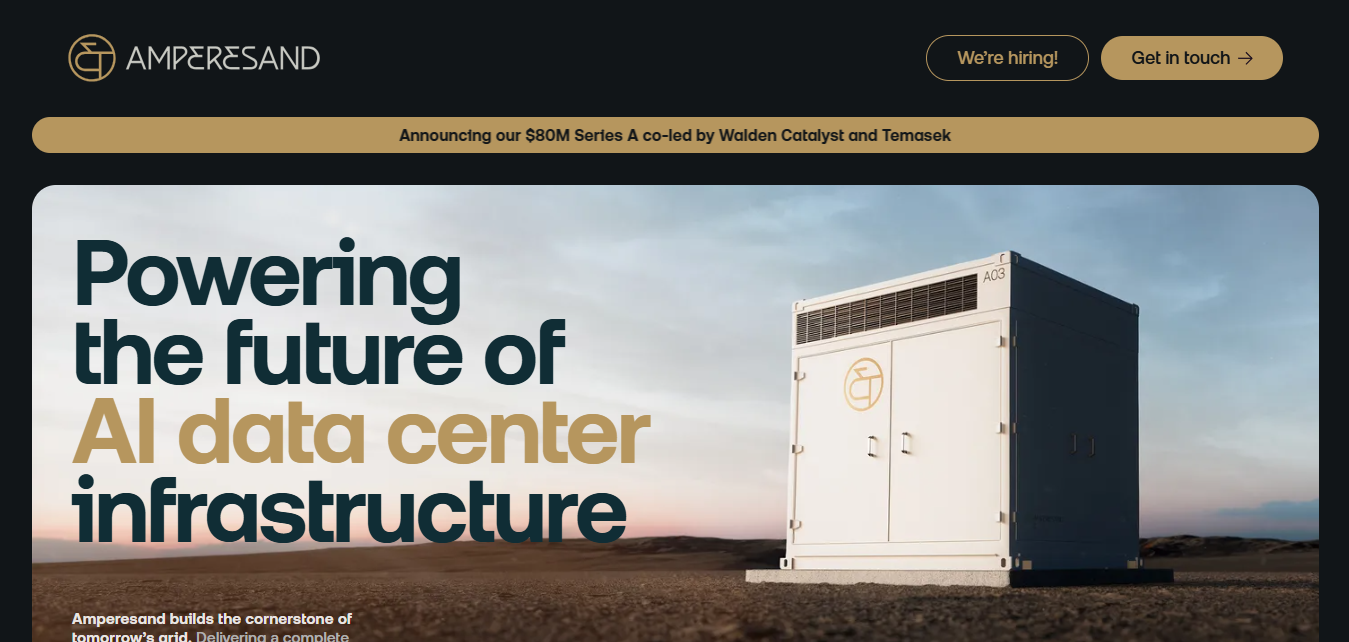
Latest Rounds
November 30, 2025 by
Ampersand Raises $80M to Power the Next Era of High-Performance Materials
Ampersand has secured a major $80 million Series A round, positioning itself as one of the most significant deep-tech companies...
Read More
Latest Rounds
November 30, 2025 by
OpenHands Raises $18.8M to Bring Autonomous Coding Agents Into the Enterprise
OpenHands has raised $18.8 million in Series A funding, marking one of the strongest signals yet that autonomous software development...
Read More